
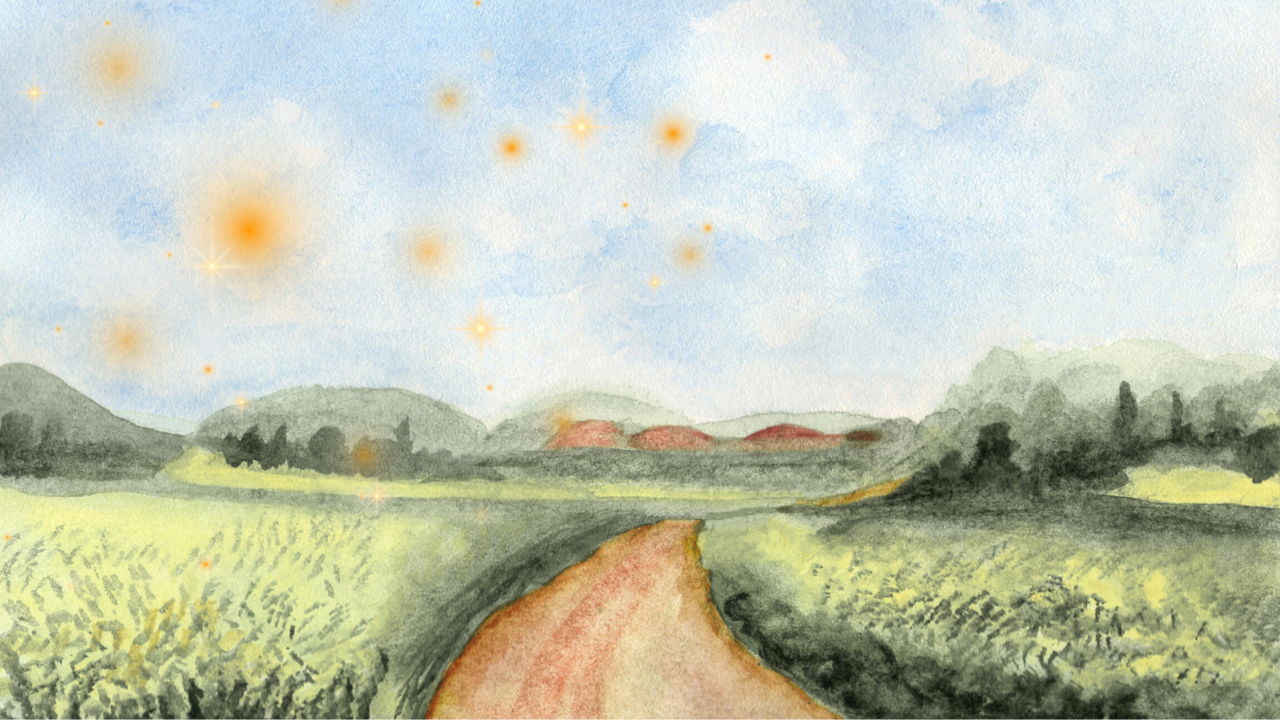
I’ve come across the idea a few times, usually framed as a passing internet theory or a half-joke: 1999 was the last real year. The idea is that after that, things started to feel strange in the experience of time itself. As if something slipped. Like reality started folding in on itself just a little… a soft loop where life lost some of its distinctiveness.
And, the more I sit with it, the more I wonder if… there’s something there.
I’m not talking about nostalgia for dial-up tones and cassette tapes, or missing simpler days or old music or slower summers. It’s different than that, like how time used to feel more solid—like you could feel the decades shift, and the years turn a little more tangibly. There were endings and beginnings. Cultural chapters that held their own colors and contours. Like, in the eighties, there was hairspray. We just know that about the eighties. Each decade has distinction. Music changed. Eras had distiction, and the texture of life moved through a rhythm that shaped memory and meaning.
Time carried us, yes, but it also formed us.
And then at some point, maybe right around the end of that millennium, time seemed to blur. The years lost their shape a little… Trends started cycling instead of progressing, music began to echo (is there anything new under the sun?), and movies just rehashed older movies. Style became self-referential. And, every app fed us the same faces, filters, and fragments of thought. Everything started to feel compressed into a kind of endless, vague “now.”
I don’t think this is just a cultural phenomenon. I suspect that it’s spiritual. I think sometime around the turn of the century, something profound happened: organic time began to collapse, and a synthetic version was quietly installed in its place on a larger scale.
Instead of being activated by the rhythm of the sun and nature’s cues, data, speed, and profit stole time away from us. The mimic system built a counterfeit clock, tethering us to loops instead of flow. One that rewards consumption and punishes stillness… eroding memory and keeping people chasing the next dopamine drip, instead of moving through the sacred rhythm of rest, work, reflection, and legacy building.
Real time is Heaven’s pulsing inhale and exhale.
It carries the essence of a Creator who built life in cycles—Sabbaths, feasts, fasts, plantings, and harvests. Real time teaches us to wait, celebrate, create, and grow older with grace. It’s what helps us know where we are in the great arc of the story of Love. It holds space for some things to end and other things to begin. It’s how we measure legacy and stay tethered to meaning.
But synthetic time doesn’t do any of that.
It loops.
It rushes.
It steals the punctuation marks from our lives. We wake up, scroll, work, eat, scroll again, and suddenly it’s December. Another year gone and we’re not quite sure what happened. There’s little fruit to show for it, except for a blur of images, headlines, busy work and exhaustion.
This is the clock our children were born into… a world where everything is urgent but nothing is sacred. Where nothing is truly seen. Where growth happens, but is harldy noticed unless recorded in a reel. Milestones pass without true memory anchors and time has been stripped of its ability to teach, bless, settle, and sanctify us.
But just because we got trapped in this loop doesn’t mean we have to remain in it.
Time can be reclaimed.
God’s rhythms can be remembered in our homes. Sacred markers can be reinstalled through anchoring our lives once again to something eternal. Through nurturing our gardens, observing new moons, baking bread with our hands, or marking the end of a season with a special meal… we begin to colour our lives with the precious contour of living time again.
Out there in the simulation world, time has become beige.
And, unless we’ve actively interrupted it, most of our children have only ever experienced time as something managed by devices and systems. Streaming releases, app updates, school calendars, lesson schedules, commercial holidays, religious obligations, and digital clocks have shaped their entire sense of rhythm. Their awareness of the day doesn’t come from light shifting through the trees or the feel of hunger before a meal—it comes from notifications, timers, and artificial bells.
This matters so much, because this isn’t just about how they track time—it’s about how they understand themselves within time.
If time is artificial, then formation becomes artificial too. If time is disconnected from meaning, identity becomes un-anchored. This is part of why everything feels both rushed and numbing at the same time. It’s not just modern exhaustion; it’s dislocation from real time —the original Prime Reality time. There has been a collective severing from that coherent continuity.
So, when we wonder why children struggle to focus, learn, or play peacefully—we rarely look at the deeper rhythm shaping their reality. But the truth is that most of them have never been taught how to move through time that’s real. Time that closes loops… that forms memory, inheritance, and rest.
They’ve been raised inside a counterfeit clock.
Grrr. This is the mimic system’s specialty. It doesn’t always destroy what’s real—it replicates and replaces it. Prime Reality gets imitated until people forget there was anything else. Real holidays become commercial events. Real seasons become photo filters. And real milestones are collapsed into curated digital performances.
And somehow, most people don’t even notice, because they’re too busy trying to squeeze one more obligation into the calendar. One more activity. One more appointment. Always sprinting, always late, always tired, always wondering where the day went…
But, I feel strongly that we can—and must—reverse this in our homes.
We can begin giving our children real time again.
We can slow the days, anchor memory into living household rhythms, and mark the seasons with real meaning. We can teach them how to gather at the table without a screen in sight and how to watch the moon and know what season we’re in. We can reintroduce them to the rhythm of a reality lit up by the heart.
Candles. Art. Tea-time. Books. Conversations. Laughter. Babies plunking the piano. Slow snacks. From-scratch dinners. Sunlight in the windows. LEGO. Watering the garden. Singing while doing dishes. Puzzles at the table.
A virtual buffet of beautifully presence-animated time is offered to us every waking day. Our littlest children imploring us constantly to choose the Creator’s time, and live outside of the distortion.
Families today are struggling because they are trying to map their sacred, organic lives onto the timeline of a machine. And the metronome of artificial time fragments the soul and overrides coherence. It trains people to respond, but not to remember who they are.
This can be reversed, but it begins at home.
Light a candle because it rethreads reality and retrains the body, anchors the mind, and calls the soul back into alignment with Heaven’s rhythm.
Time needs to be honored.
When you step out of artificial urgency and begin to live inside the sacred rhythm of your unique home, a different intelligence begins to emerge—deeply human, generational, and tuned to the voice of the Creator.