
For many Christians, the idea of a sudden rapture (a moment when believers will be instantaneously taken up to heaven before a time of global tribulation) is considered foundational to end-times belief. It has been popularized through novels, films, and the cultural imagination. Yet this dramatic vision, so widely accepted in the Western evangelical psyche, is not rooted in the historical teaching of the Church nor in a careful reading of Scripture.
The Back Story
The modern rapture doctrine emerged in the 19th century, articulated by John Nelson Darby, a leading voice in the Plymouth Brethren movement. He developed a framework known as dispensationalism, which divided history into distinct eras (or “dispensations”) of God’s interaction with humanity. Central to this view was the idea of a pre-tribulation rapture: a sudden, supernatural removal of believers before a time of global upheaval and judgment.
Interestingly, the earliest catalyst for this teaching was a teenage Scottish girl named Margaret MacDonald, who in 1830 claimed to have received a visionary dream during a revivalist meeting. In her vision, she described a supernatural removal of the faithful prior to a time of trial. Her account sparked theological curiosity within charismatic and Brethren circles and Darby later adopted elements of her vision and gave them “doctrinal structure”, helping transform her spontaneous personal experience into a broader eschatological position.
Note: Eschatology is the study of the “last things”, including the return of Jesus, final judgment, resurrection, and the eternal destiny of humanity.
But the real turning point in the spread of rapture theology came a bit later through publishing. In 1909, the Scofield Reference Bible was released. Edited by Cyrus I. Scofield (a controversial figure with connections to elite New York social and political networks) the Scofield Bible embedded Darby’s dispensational framework directly into the biblical text through footnotes, cross-references, and timelines.
While Bible commentaries are common today, the Scofield Reference Bible was the first of its kind to place commentary and Scripture side by side on the same page, giving Scofield’s theological interpretations the subtle appearance of biblical authority rather than personal opinion.
There are also some interesting circumstantial connections between the Scofield Reference Bible and the Rockefeller family (hmm… where have we seen them before? They dabble in everything!) During the late 19th and early 20th centuries, several wealthy industrialists, including those within the Rockefeller circle, were known to support Christian Zionist efforts, which aligned with a growing theological movement promoting the return of the Jewish people to Palestine as a fulfillment of biblical prophecy. This movement was religious and political, and served the interests of global powers who saw a strategic advantage in establishing a Western-aligned presence in the Middle East.
The agenda of Christian Zionism, especially as popularized through tools like the Scofield Bible, often focuses on a prophetic timeline that includes the physical restoration of Israel, a future Third Temple, and an imminent rapture. While this view uses Scripture to frame geopolitical developments, it can subtly reduce God’s covenantal purposes to political outcomes, focusing more on land and events than on the transformation of hearts. (It also tends to promote unquestioning political support for modern day Israel, at the expense of justice, peacemaking, and the global, inclusive nature of God’s Kingdom.)
In contrast, God’s real design isn’t about political Zionism, but Kingdom fulfillment—a spiritual house built on Christ, made up of living stones from every tribe, tongue, and nation. The true inheritance isn’t a plot of land, but a new heavens and a new earth where righteousness dwells. God’s heart has always been for all people, both Jew and Gentile, to be reconciled in one new humanity through Christ.
So while history shows that theological and financial forces shaped certain modern doctrines (often with earthly agendas in mind) the true storyline of Scripture is the restoration of all things in Christ… not the promotion of empires, borders, or national pride.
The early Church knew nothing of a secret escape before tribulation. The words of Christ in Matthew 24, and the consistent testimony of Revelation, also point to a faithful remnant who overcomes through endurance.
“Immediately after the tribulation of those days the sun will be darkened, and the moon will not give its light; the stars will fall from heaven… Then the sign of the Son of Man will appear in heaven… And He will send His angels with a great sound of a trumpet, and they will gather together His elect from the four winds, from one end of heaven to the other.”
—Matthew 24:29–31
“But he who endures to the end shall be saved.”
—Matthew 24:13
The widespread acceptance of the rapture doctrine in the West has been shaped more by publishing influence, theological novelty, political convenience, and psychological fear than by fidelity to apostolic teaching.
In our time, this belief functions as a seductive, yet soothing placeholder, offering the comfort of escape while muting our discernment. It lulls many into passivity, distracting them from the very real structures of end-time control now materializing around them, and delaying the courageous, grounded preparation these times require of us. There is so much to do to prepare!
The early church, the apostolic writings, and the teachings of Jesus Himself speak consistently of perseverance, endurance, and visible witness through trial, not escape from it.
The pre-tribulation rapture is not found in Scripture as a coherent or consistently supported doctrine, and its popularization owes more to cultural escapism and speculative theology than to the Kingdom truth revealed in Scripture.
One of the key texts often used to support the rapture idea is Matthew 24:40-41:
“Then two men will be in the field; one will be taken and one left. Two women will be grinding at the mill; one will be taken and one left.”
At first glance, this might seem to describe a sudden removal of believers. (Didn’t you love that soulful song that DC Talk revived back in the day?) But the context clarifies something else entirely!
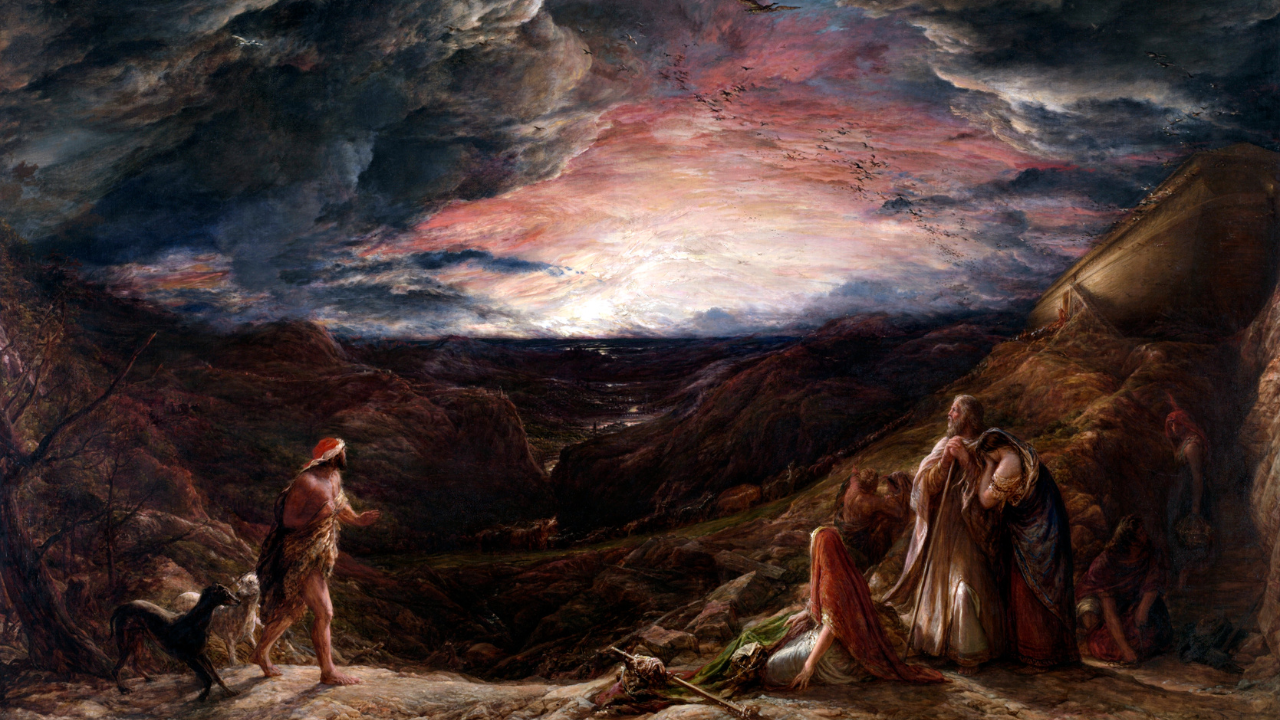
Just a few verses earlier in Matthew 24, Jesus offers a critical interpretive key to the rest of His teaching. He says, “As it was in the days of Noah, so it will be at the coming of the Son of Man… the flood came and took them all away”. This is an unmistakable reference point. In the story of Noah, the ones “taken” were not the faithful, but the unrepentant. They were swept away by judgment, removed from the earth through destruction. It was Noah and his family (the righteous) who remained, preserved through obedience and covenant alignment.
This context matters deeply, because just after referencing Noah, Jesus uses the same language again: “Two men will be in the field; one will be taken and the other left.” Many have interpreted this as a picture of the rapture, assuming the one “taken” is rescued. But consistent with the previous verses, the one taken is removed in judgment, not caught up in reward. The one left is the one who endures.
Luke’s Gospel confirms this.
In the parallel passage (Luke 17:34–37), when Jesus describes some being “taken,” the disciples immediately ask him, “Where, Lord?” And Jesus replies, “Where the corpse is, there the vultures will gather…” This is a vivid and unsettling image, but a clear one.. He is speaking of those removed to judgment. So this verse is actually a sobering warning.
Throughout Scripture, the consistent pattern is that those who are aligned with God’s ways are the ones who remain, while those living in distortion or opposition to truth are the ones who are removed. Proverbs 10:30 says, “The righteous will never be removed, but the wicked will not inhabit the earth,” and in Psalm 37, those who wait with trust and humility are promised the inheritance of the land, while those out of alignment are “cut off.”
Jesus affirms this in the parable of the wheat and tares (Matthew 13:30), where He instructs the reapers to first gather the tares, those not rooted in truth, for removal. This directly challenges the popular rapture doctrine, which reverses the pattern by suggesting that those in alignment are the ones taken away, while the rest are left behind.
Even the Greek words used in Matthew 24 reinforce this: the word for “taken” (paralambanō) can carry a negative meaning (as when Satan “took” Jesus to tempt Him), while “left” (aphiēmi) can imply being safely kept or released in peace. When viewed in context and through the consistent pattern of God’s restorative design, it becomes clear that the “taken” in Matthew 24 refers to those removed in judgment or deception, while those who remain are the ones who endure, stay aligned, and inherit what God has prepared.
Psalm 37 declares, “The wicked will be cut off… but the meek shall inherit the earth.”
In light of this, the common modern interpretation of “being taken” as a rapture event is not only exegetically unsound, but, I believe, deeply misleading. It reverses the meaning of Jesus’ words and dulls the call to perseverance and faithful endurance that runs through the entire New Testament. Rather than preparing Jesus followers to stand in the midst of shaking, the rapture view teaches them to await a tidy escape, and in doing so, makes them vulnerable to deception when the real testing comes.
The Plot Twist
While Scripture doesn’t teach a pre-tribulation rapture, the idea of a mass disappearance has been deeply seeded into the collective imagination of the Western Church. For over a century, countless books, films, and teachings have dramatized the moment when “the righteous vanish” and chaos follows. This expectation has conditioned much of the Church to anticipate a sudden, “blink‑of‑an‑eye” evacuation from the world.
But what if this anticipation itself becomes a tool of deception?
Here’s where it gets twisty: the enemy isn’t just evil, he is also highly intelligent, strategic, and deeply invested in mimicry. He does not create, he counterfeits, and his primary method is through manipulation of perception. Just as Pharaoh’s magicians replicated Moses’ signs, and just as the false prophet in Revelation calls down fire from heaven in imitation of divine power (Revelation 13:13), the adversary seeks to manufacture convincing imitations of God’s promises to lure people into false alignment.
In this light, it isn’t difficult to imagine how, in the coming time of great deception, the antichrist system could engineer a false, global “rapture-like” event to validate its authority. Jesus warned that many would be deceived, even some of the elect if possible (Matthew 24:24), and that the final days would be marked by lying signs, wonders, and false interpretations of supernatural events. Whether through advanced holographic projections (Project Blue Beam), frequency-based mind manipulation, or even staged disappearances through hidden technologies, the real danger would be the interpretation.
A manipulated event could be broadcast as a divine evacuation or ascension, leading many to believe the false narrative that those “taken” were saved, while in truth, it may serve to usher in loyalty to the beast, mock the return of Christ, and further harden hearts to the truth. This is why discernment is critical in order to rightly interpret what it means in light of God’s Word and Kingdom patterns.
If millions were to suddenly vanish, how many believers, conditioned by decades of rapture theology, would interpret such an event as divine rescue? The emotional devastation among the faithful who “remain” could be profound. Convinced they were left behind, many would spiral into despair, questioning their worthiness, their salvation, or even the character of God Himself.
You see, the rapture doctrine presents a theological vulnerability that could be exploited by a global agenda eager to define reality on its terms.
In this theoretical “rapture deception” the disappearance might signal a psychological and spiritual operation designed to influence allegiance. It may function as a pretext to tighten global control, or as a false validation of an emerging leader’s “divine authority.” Those who remain and refuse to participate in the new order would be painted as threats to this global peace, which would fulfill the prophecy of 2 Thessalonians 2:11, where Paul says that God allows a strong delusion to come upon those who “refused to love the truth.”
Jesus didn’t say, “Blessed are those who escape.” He said, “The one who endures to the end will be saved” (Matthew 24:13). Revelation says the same thing: “Here is a call for the endurance of the saints, those who keep the commandments of God and their faith in Jesus” (Revelation 14:12).
The true remnant is not defined by being whisked away, but by their unwavering presence on the earth that Christ is planning to restore. They are the ones who remain rooted, clothed in light, holding their ground as the systems of the world unravel around them.
This is why discernment matters so deeply now, because misunderstanding the story can lead to misalignment in the field.
Caught Up
Okay, now another one of the most widely used passages in regards to the rapture, is 1 Thessalonians 4:17, which speaks of believers being “caught up… to meet the Lord in the air.” The Greek word apantēsis, translated as “meet” in 1 Thessalonians 4:17, refers to the ancient custom of a welcoming delegation… citizens going out to greet a visiting king and then escorting him back into the city in honor. The image isn’t one of absolute removal, but of a royal procession, where the faithful rise to welcome Jesus and accompany Him as He returns to reign on the earth.
Scripture isn’t describing the evacuation of the faithful while the world collapses. It’s describing the return of Christ to reign as King over a renewed earth, with His people gathered to Him, prepared to participate fully in His Kingdom.
To believe in a pre-tribulation rapture is to accept, perhaps unconsciously, that the Church’s destiny is to avoid the hard stuff, rather than transform through it.
But the true pattern in Scripture is deliverance through adversity, not deliverance from it.
Noah was not lifted out of the earth, he was preserved in the ark as judgment passed. Daniel wasn’t removed from Babylon, he was sustained within it. The early disciples were not promised protection from persecution, but the power to endure and witness through it.
The rapture narrative, then, acts as a subtle distortion, one that resonates with a culture addicted to comfort and eager to escape the chaos unfolding around us. It undermines spiritual readiness by framing hardship as evidence of God’s absence, rather than recognizing it as the very furnace where our faith is purified, our courage is forged, and the Bride is made ready.
Jesus prayed, “I do not ask that you take them out of the world, but that you keep them from the evil one” (John 17:15). His prayer was not for removal, but for fortification.
C.S. Lewis once said, “God whispers to us in our pleasures, speaks in our conscience, but shouts in our pain. It is His megaphone to rouse a deaf world.”
The coming tribulations are not interruptions of God’s plan but part of His means of awakening and separating the true from the false. The shaking is the sorting.
This is precisely why the rapture doctrine, as it has been popularly imagined, is so spiritually dangerous. It subtly disarms the Church, soothing believers into passivity when the times require sober discernment and very significant practical action. It offers a counterfeit timeline and a counterfeit comfort, distracting from the actual nature of the end-time conflict as a deliberate, visible sorting of allegiances. The faithful are not called to escape, but to remain radiant, coherent, and unshaken in the midst of Babylon’s dissolution.
The belief in a pre-tribulation rapture also benefits the global elite by producing a passive, disengaged Church that anticipates escape rather than endurance. When believers are convinced they’ll be removed before crisis, tyranny, or persecution, they are far less likely to prepare, stand firm, or challenge rising systems of control. This mindset weakens resistance to global governance, surveillance, technocracy, and social engineering, all while redirecting the Church’s focus away from advancing the Kingdom on earth. Instead of building, stewarding, or confronting darkness, a rapture-focused Church waits to leave, creating the perfect vacuum for elite agendas to grow unchecked.
God has never promised to spare His people from the fire, but He has promised to be with them in it. From the wilderness to the furnace, from exile to persecution, the pattern of Scripture is clear: God sustains, preserves, and empowers His people through the shaking, not by removing them from it. The return of Christ isn’t a secret vanishing, it will be a cosmic unveiling, a thunderous, visible, once-for-all event that leaves no room for speculation or confusion (Matthew 24:27; Revelation 1:7)… wait till I get to that topic!
So, the call to the end-time Church is to overcome the lies of this world and to bear witness under pressure. To radiate the unshakable love and government of Christ in our homes and families when everything else begins to fall. This is the true remnant Church: victorious in suffering, luminous within the story, and rooted securely in Christ.
The inheritance of the saints isn’t found in absence from the battlefield, but in standing faithfully on it.
To teach otherwise is to encode a false signal into the Body, one that primes a generation for a deliverance that won’t arrive in the form they anticipate. It weakens spiritual perception when it is needed most and dulls the inner resonance required to navigate engineered chaos. Many sincere believers have been left exposed and spiritually disoriented by this distortion, so part of our task now is to recalibrate the frequency and prepare hearts to endure the coming days with coherence and embodied trust.
Because the true question before us is a matter of our covenantal allegiance. We are being transfigured through the furnace, refined, pruned, and re-patterned for fidelity. Christ isn’t returning for a Bride in hiding, shielded from discomfort and softened by ease, but for one whose love remained radiant in the midst of collapse. Not one who fled Babylon, but one who stood in unshakable truth while Babylon paraded every counterfeit of comfort, pleasure, and power.
A bride who could not be seduced, bought, or broken.
What is coming upon the world is a total architecture of control, engineered through biometric systems, surveillance, social credit, and synthetic identity. As our access to the normal systems of life becomes conditional, and our freedom is replaced by the empire’s permission, many will grow desperate for relief. It is in this vulnerable moment that another “taking” may occur, not by the hand of God, but through the machinery of deception. Many will be swept into digital conformity, trading true sovereignty for a synthetic salvation, but others will remain anchored in truth and unmoved by the lie.
I believe that the popular rapture narrative is a misdirection. The real escape is inward and forward into deeper union with Christ, into our covenant alignment with His Kingdom, and into the unshakable architecture of truth that endures when everything else falls.