
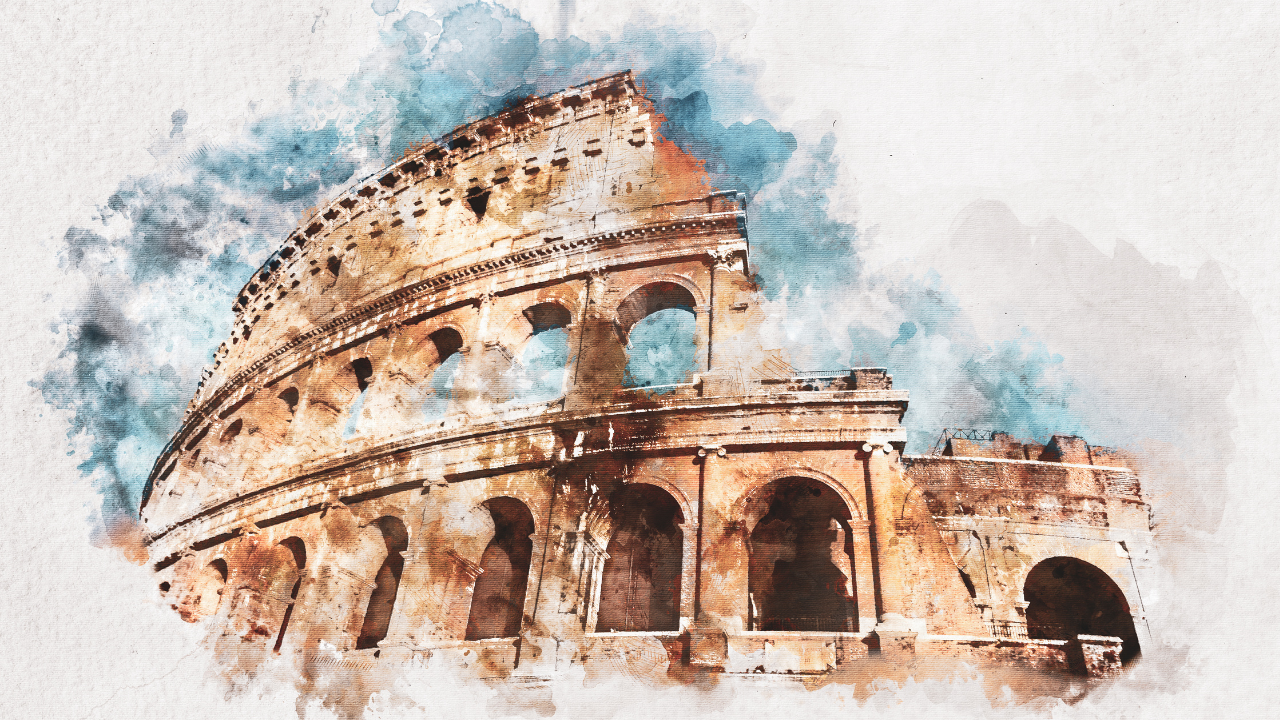
Did the Millennial Reign of Christ Already Happen?
For most of the modern church, the thousand-year reign described in Revelation is treated as a future hope—an era of peace, beauty, and righteous governance that will begin only after Christ returns. In this view, Revelation 20 is a promise still pending, an unfulfilled chapter that believers are meant to look forward to with anticipation. That assumption is so deeply embedded in mainstream teaching that it is rarely questioned. Yet when we examine both scripture and history with care, another picture emerges: the Millennial Reign may not be an event waiting on the horizon, but a reality that has already been fulfilled, exactly as God said it would be.
If that is true, then we are not standing before the thousand years—we are living in the short, intense “little season” that comes after it (Revelation 20:3), when Satan is loosed for a brief time before the final judgment.
The implications of this shift are profound.
The placement of the Millennial Reign on the true timeline determines how we read prophecy, how we interpret the world around us, and how we prepare for what is coming. If we place it in the wrong era, we will misread the signs of the times. We will confuse the sequence of events, and with that confusion comes vulnerability—vulnerability to counterfeit messiahs, to deceptive timelines, and to false assurances about the future. Jesus warned repeatedly about deception in the last days (Matthew 24:4–5, 24). Misplacing an entire thousand-year epoch is not a minor interpretive error; it is the removal of one of the greatest reference points God gave us for orientation at the end of the age!
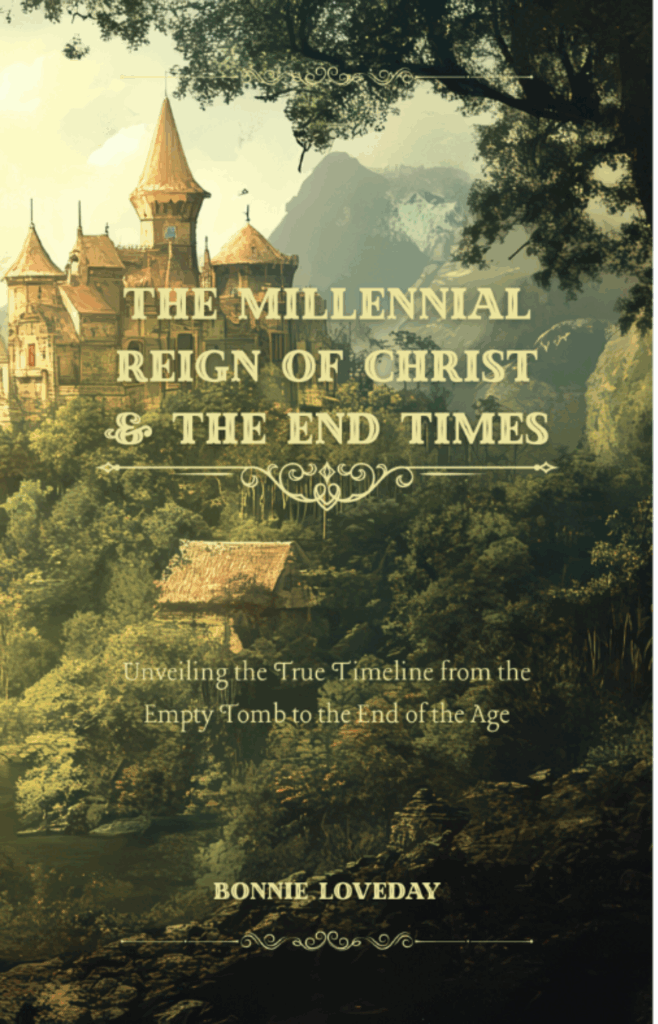
My book outlines the history that has been hidden from humanity for hundreds of years. Once you see it, you can’t unsee it! Be sure to grab a copy here.
The forgetting of this reign has not been a passive accident of history. Across the centuries, layers of deliberate erasure have been at work. Historical records were destroyed, rewritten, or reinterpreted. Physical evidence—cities, aqueducts, agricultural systems, and monumental architecture that bore the mark of Christ’s governance—was renamed, misdated, and claimed by other empires. The unified maps and chronicles of the world were redrawn to fracture memory and hide the existence of a single, righteous rulership that covered the earth. What remains of that age is scattered in fragments: testimonies dismissed as myths, structures explained away as the work of pagan civilizations, and faint echoes of a time when “the earth shall be full of the knowledge of the LORD, as the waters cover the sea” (Isaiah 11:9).
This loss of memory has left the church in a fragile position. Many believers read Revelation as though every event in it is still ahead, unaware that large portions have already taken place. They live in expectation of a thousand years of peace that has already passed, and in doing so, they misinterpret the turbulence of the present moment. When scripture says that after the thousand years Satan would be released “to deceive the nations which are in the four quarters of the earth” (Revelation 20:7–8), it describes a season of global deception, unrest, and gathering for a final battle. If that is the era we now inhabit, then our preparations, our posture, and our discernment must be shaped accordingly.
This is why recovering the truth about the Millennial Reign matters urgently now. We stand at a convergence of pressures—political, spiritual, and environmental—that bear the marks of the closing of an age. The final confrontation between the Kingdom of God and the forces of rebellion is not a distant theoretical moment; it is the trajectory we are already on. Jesus spoke of a time when “the powers of heaven shall be shaken” (Luke 21:26) and when the hearts of many would fail for fear. That time demands clarity, not confusion, and that clarity can only come from aligning with Heaven’s actual timeline. If we mistake the order, we will mistake the signs. If we mistake the signs, we risk mistaking the King when He comes.
What follows will be a recovery of our bearings. We will walk through the scriptural record, beginning with the prophecies in Isaiah, Daniel, and Revelation that describe the reign of the Messiah, and examine how the New Testament writers and early believers understood those prophecies as well. We will look at historical accounts from cultures across the world that recall an age of peace and right order—an age that matches the description of Revelation 20 more closely than any imagined future. We will examine the architectural and agricultural remnants that testify to a global administration marked by justice, abundance, and harmony between nations. And we will trace how and why this knowledge was stripped from collective memory, leaving the church vulnerable to counterfeit histories and future scenarios crafted by those who oppose the Kingdom.
This is not simply about correcting a chart or a doctrine. It is about recovering our position in the story God is telling. When Revelation speaks of the thousand years, it speaks of a real, global era when Christ reigned visibly, fulfilling the promise of Psalm 72 that “He shall have dominion also from sea to sea, and from the river unto the ends of the earth” (Psalm 72:8). To forget that reign is to forget one of the greatest victories of our King and to misread the urgency of our present moment. Remembering it is essential for the generation that will see the final return of Jesus and the creation of the new heaven and new earth.
The Promise of the King’s Reign
Long before the birth of Jesus, the prophets spoke of a coming ruler who would not only redeem His people but govern the earth in righteousness. This was not a vague, mystical hope—it was detailed and concrete, described in the language of law, justice, and physical transformation of the nations. Isaiah prophesied of a child who would be given “the government upon his shoulder” and who would reign “upon the throne of David, and upon his kingdom, to order it, and to establish it with judgment and with justice from henceforth even for ever” (Isaiah 9:6–7). This was not merely the salvation of souls; it was the establishment of a government that would reach into every sphere of human life.

The Psalms echo this vision with striking specificity. Psalm 72 describes the reign of the Messiah as a time when “He shall judge thy people with righteousness, and thy poor with judgment” (v. 2). The result would be peace so pervasive that “there shall be abundance of peace so long as the moon endureth” (v. 7). His dominion would stretch “from sea to sea, and from the river unto the ends of the earth” (v. 8), and the nations would bring Him tribute. This is not the language of a purely internal, invisible kingship; it is the language of actual, physical rule over the nations, marked by justice, prosperity, and reverence for the King.
Zechariah reinforces the same picture, speaking of a day when “the LORD shall be king over all the earth” and “there shall be one LORD, and his name one” (Zechariah 14:9). This kingship would reshape the behavior of nations—so much so that they would come annually to Jerusalem to worship the King and keep the Feast of Tabernacles (Zechariah 14:16). Here again, the reign is described as a lived reality, with political, cultural, and agricultural dimensions, not as an abstract rule confined to the human heart.
When we move into the New Testament, the continuity is clear. The apostles preached not only the death and resurrection of Jesus but also His exaltation as the rightful ruler of heaven and earth. After His resurrection, Jesus declared, “All power is given unto me in heaven and in earth” (Matthew 28:18). Paul in 1 Corinthians 15:25–26 explained that He must reign “till he hath put all enemies under his feet,” with the final enemy being death itself. This reign was active and ongoing—it had a beginning, it had a scope, and it would have a point of completion.
Revelation 20 gives us the most explicit description: after the defeat of the beast and false prophet, Satan is bound for a thousand years so that “he should deceive the nations no more, till the thousand years should be fulfilled” (v. 3). During this time, those who were faithful to Christ “lived and reigned with Christ a thousand years” (v. 4). The text does not present this as symbolic imagery for the church age; it presents it as a distinct and definable period in which Christ and His people exercise real authority over the nations, free from the deception that had previously enslaved them.
This matters because if we reduce the promise of the King’s reign to a symbolic “spiritual rule in our hearts,” we strip it of its scriptural weight. The prophets, psalmists, and apostles spoke in terms that required a tangible fulfillment—cities governed in righteousness, nations at peace, the poor defended, the oppressor broken, the land itself renewed. That is the standard by which the promise should be measured. And it is that kind of reign, real and embodied, that Revelation 20 situates between Christ’s resurrection victory and the final judgment.
If we understand the promise in its fullness, we can begin to recognize its fulfillment not as a far-off dream but as an historical reality that has already shaped the earth.
The loss of that recognition is part of why our generation struggles to place itself rightly on God’s timeline. Before we can recover our bearings, we must see the King’s reign as the Bible describes it—substantial, world-governing, and the direct answer to the prophets’ hope.
When the King Came to Reign
The resurrection of Jesus was not the end of His work on earth—it was the beginning of His reign. After His ascension, the apostles bore witness that He had been seated at the right hand of the Father, enthroned with all authority “in heaven and in earth” (Matthew 28:18), and that He was now “the prince of the kings of the earth” (Revelation 1:5). This was not a kingship deferred to a distant future; it was inaugurated in that very generation. The same period that saw the gospel preached to all nations (Colossians 1:23) also saw the powers of darkness shaken and the dominion of Satan curtailed, exactly as Revelation 20 describes—“that he should deceive the nations no more, till the thousand years should be fulfilled” (v. 3).
With the deceiver bound, the nations entered into a time unlike any before in human history. For a thousand years, Christ reigned with His saints (Revelation 20:4), and the earth reflected the justice, beauty, and order of His government. Isaiah’s vision of every man sitting “under his vine and under his fig tree; and none shall make them afraid” (Micah 4:4) was not just poetic—it was lived reality. Warfare ceased between nations, law was executed with righteousness, and creation itself began to heal from the millennia of violence and corruption it had endured. The harmony extended to the land and the waters, as agriculture flourished without the blight of exploitation, and the built environment reflected heavenly order.
The architecture of this era bore the mark of its King: monumental yet harmonious, designed to align with the natural world rather than dominate it. Cities were not sprawling engines of greed and control but places of refuge, learning, and worship. Water systems, agricultural terraces, and transport routes were all integrated in ways that preserved the fertility of the land and honored the Creator’s design. It was a time when the laws of heaven were lived, and where even those who did not fully understand the mysteries of the Kingdom benefited from the peace and justice of its governance.

In our own time, whispers of this age sometimes surface in unlikely ways. One of these is the growing fascination with what is called “Tartaria.” Across the internet, people share images of grand old structures, strange maps, and traces of a global civilization that does not seem to fit the sanctioned timeline of history. Much of the discussion is tangled with speculation and misdirection, yet the very persistence of these questions signals something important: the human spirit senses that a vast chapter of history has been hidden. Beneath the confusion lies the faint echo of the thousand-year reign of Christ—a real, embodied era of global order and beauty that has been scrubbed from official memory.
My book outlines the history that has been hidden from humanity for hundreds of years. Once you see it, you can’t unsee it! Be sure to grab a copy here.
For some, this curiosity leads only to endless theorizing about lost empires, free energy, or mud floods. For others, it becomes a clue that points back to the truth Scripture has always carried: there was indeed a time when the earth was ruled in peace by a righteous King, when the nations were not deceived, when justice ran through the land like a river. The architectural remains, the maps that do not fit the narrative, the stories of a time when the world was connected in harmony rather than conquest—these are the fractured memories of that reign. But without the anchor of the gospel and the testimony of the apostles, the pieces are easily scattered into myths that never name the King who sat at the center of it all.
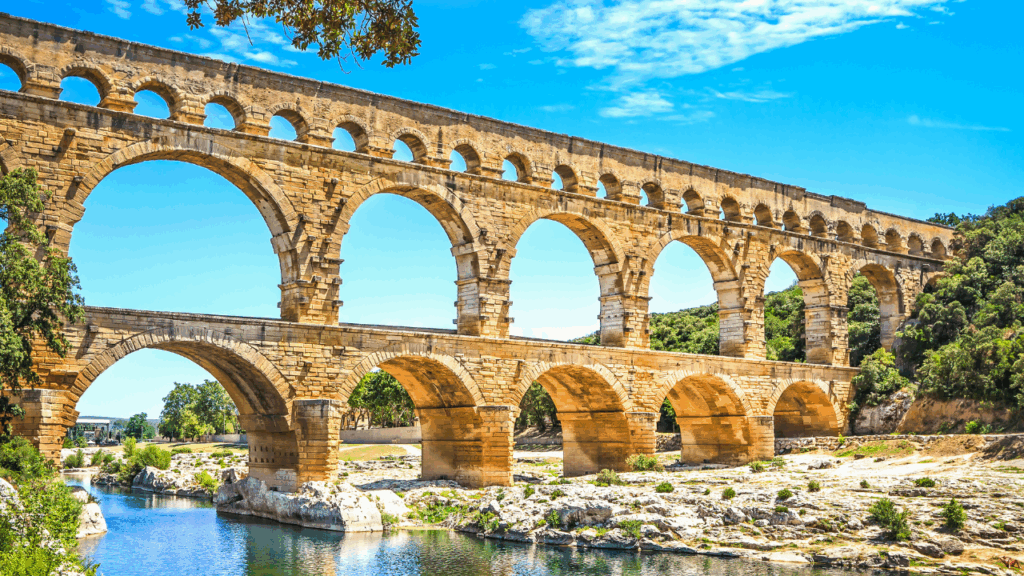
Recognizing the thousand-year reign as history, not allegory, reframes both prophecy and our current moment.
We are not waiting for such a reign to arrive; we are living after it, in the little season that Revelation 20:7–8 describes—when Satan is released “for a little season” to deceive the nations once more. That shift changes how we read the signs of our time. The collapse of order around us is not the precursor to a golden age on earth—it is the unraveling of the peace that once was, and the preparation for the final return of the King to judge, to renew, and to bring the eternal age.
Historical Evidence Hidden in Plain Sight
If the Scriptures speak of a real reign of the Messiah on the earth, a period when deception was restrained and righteous governance touched the daily lives of ordinary people, then we should expect to find more than doctrine and memory. We should expect material traces—patterns in stone, water, law, and measure—that reflect an order larger than any later empire could claim as its own. We should also expect, if Revelation 20 is our guide, signs of an abrupt change when that order fractured and a different spirit began to drive human affairs. The purpose here is not to force the material world to fit a conclusion, but to read the witnesses of the earth with the same care we bring to the text—asking what the built environment, old maps, and cross-cultural records quietly preserve, and how those fragments align with the biblical sequence: a bounded season of deception during the thousand years, followed by “a little season” when Satan is loosed “to deceive the nations” (Revelation 20:3, 7–8).
1. Architecture and the memory of a unified order
Architecture carries memory better than parchment. When a people builds the same way across wide territories for long periods, using the same modules of measure, the same alignments to sun and stars, the same grammar of arches, vaults, terraces, and waterways, those choices reveal more than aesthetics. They show law in action. In many regions of the world we find layers of construction that share a common language of order—stone set without mortar with astonishing precision; terraces that hug contour lines so tightly that soil and water are captured rather than squandered; aqueducts that keep a steady, mathematically controlled fall for many miles; streets oriented to cardinal directions or to predictable solar events. These are not the inventions of scattered villages working independently. They speak of engineers trained to a standard, of surveyors who read the land the same way, of guilds or schools that transmitted technique over generations.
Consider the way terrace agriculture appears in mountain cultures on separate continents with a maturity that looks more inherited than experimental: retaining walls placed where slope, rainfall, and soil composition demand them; overflow and drain points placed at intervals that protect the lower fields; stone steps that double as spillways. In the same valleys we see water temples, fountains, and baths where water is slowed, oxygenated, and shared. We find bridges that choose the elegant strength of the arch even when roughly hewn timber would have been faster, as if the builders themselves were under a discipline that preferred what would serve for centuries. In coastal cities, we see sea walls and port works that do not simply resist the waves but work with tides and currents—solutions that assume an integrated understanding of environment rather than a brute contest with it.
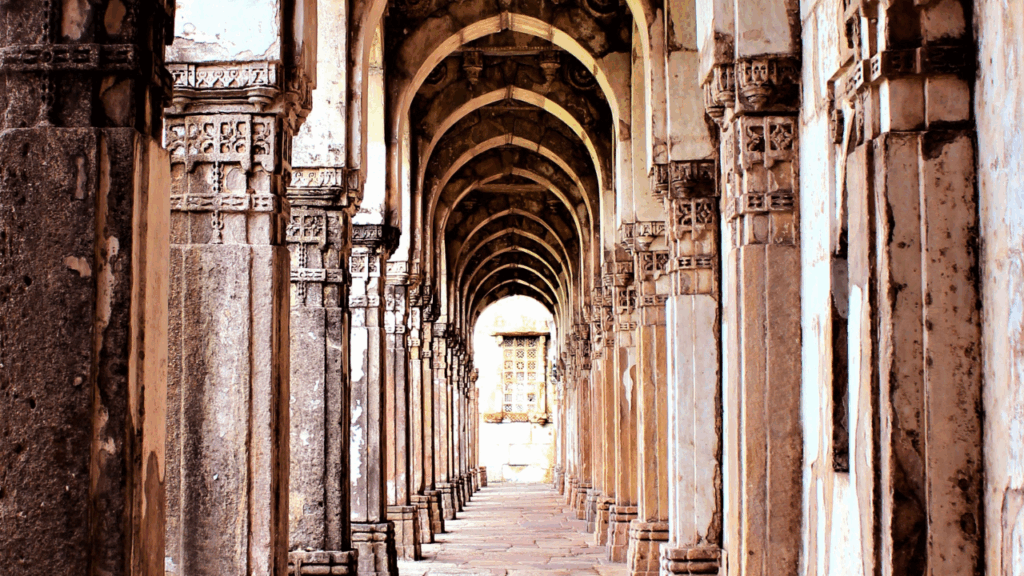
Within cities, there is a recurring arrangement that deserves attention: generous public spaces that collect light and air; cloisters and colonnades that temper heat and rain; markets placed where drainage and traffic make them sustainable; granaries, bakehouses, and mills sited near water and wind; wayfinding that can be understood by a pedestrian who has never visited. The repetition of this grammar across distant geographies suggests participation in a common law of building—one that favors human scale, acknowledges seasons, and places sanctuaries, seats of justice, and fountains in civic relation… Scripture’s vision of city-life under righteous rule is not ethereal: “He shall judge thy people with righteousness, and thy poor with judgment… In his days shall the righteous flourish; and abundance of peace so long as the moon endureth” (Psalm 72:2, 7). When the built world supports those conditions, we are looking at the materialization of a real governance.
Equally telling is the reuse of foundational works by later regimes. Conquerors everywhere build on the strongest stones they find; they level the inscriptions they cannot read and stamp their own crests on façades that predate them. The result is a palimpsest: older foundations and water-courses that keep working while new ornament wraps them in a different story. Where you see this pattern—antique substructures holding up later imperial skin—you are likely looking at a transfer of stewardship rather than the first act of construction. It is consistent with the biblical notion of a people living in “houses which ye built not” and drawing from “wells which ye digged not” (Deuteronomy 6:10–11), and with the historical reality that durable civil works outlive the regimes that inherit them.
2. Measures, modules, and orientation
A second witness comes from measure. Builders who share a standard can scale their works without chaos; roads meet roads, arches meet arches, and canals meet basins because the underlying module is constant. Across the pre-modern world we repeatedly find proportional systems based on small, human-readable modules—the foot and the cubit and their local cousins—stacked in simple integer ratios and expressed in whole-number geometries: 3-4-5 triangles, squares and rectangles doubled and halved, circles inscribed by straightforward chords. These are not the signatures of esoteric cults but of open knowledge—a craft mathematics that was teachable, checkable, and bent toward public good.
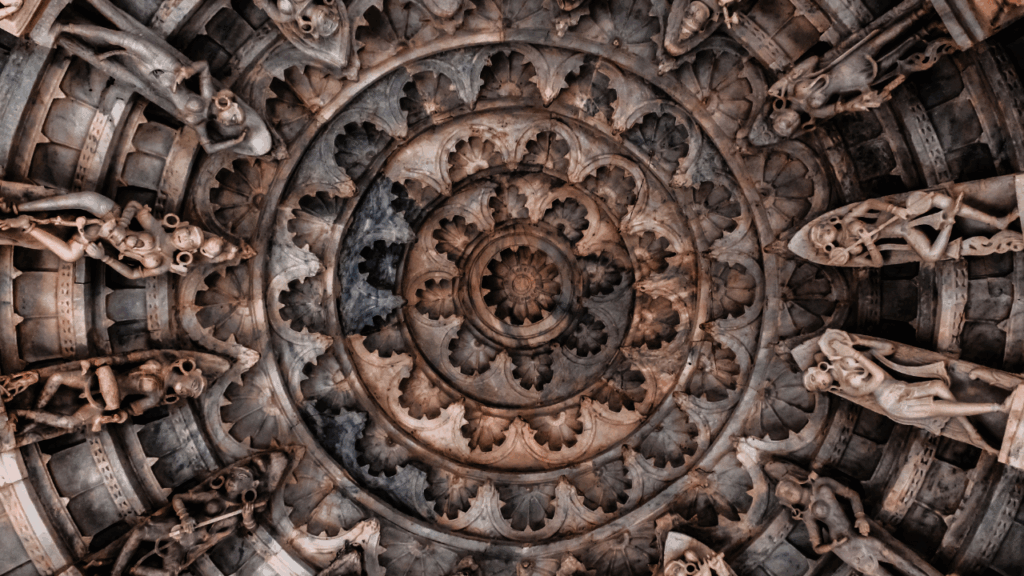
Orientation tells a related story. When a city plan, a temple precinct, a court of justice, and an aqueduct intake share cardinal alignment or shared solar targets, it signals more than an architect’s whim. It means that civic life, worship, law, and provision were intentionally coordinated to the same reference. When that orientation persists for generations, even through dynastic change, it suggests that the reference was bigger than a family or faction. Scripture ties righteous rule to fixed points of reference—times and seasons, sun, moon, and stars set “for signs, and for seasons, and for days, and years” (Genesis 1:14). An ordered society under the King would have used those same gifts as common timekeepers and guides, letting heaven’s regularities discipline earthly work.
3. Maps and the echo of a global survey
Maps are silent witnesses with long memories.
Even when their cartouches flatter patrons and their borders echo the politics of the day, the coastlines, rhumb lines, and latitudes betray the survey data they inherited. Early modern maps often display a level of coastal accuracy that implies access to comprehensive hydrographic knowledge. Portolan charts with dense compass radiations, consistent bearings, and repeatable distances, do not spring from isolated pilots guessing by dead reckoning. They require shared standards and an archive of observations.
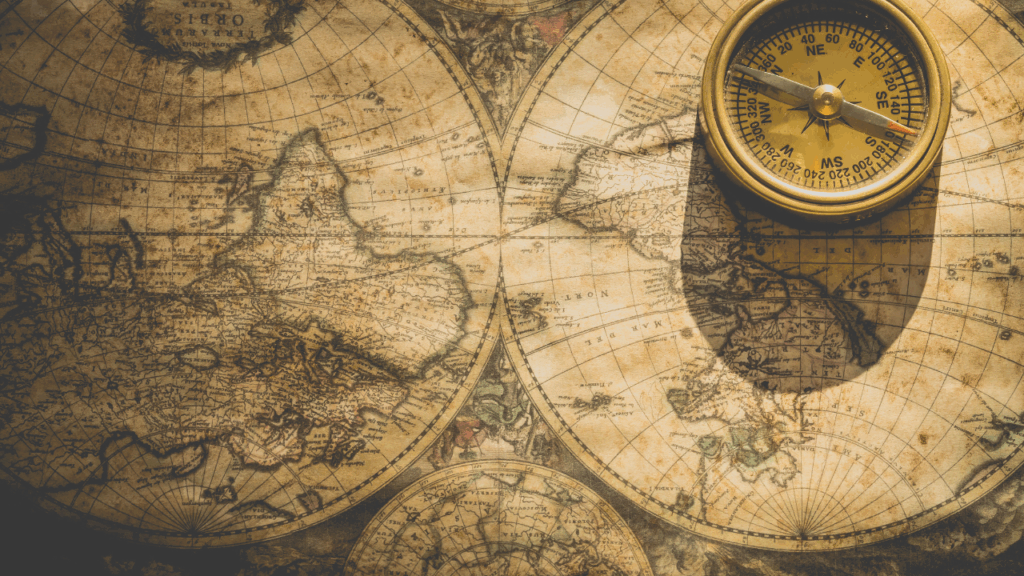
Beyond coastlines, there are anomalies that suggest older knowledge resurfacing under new names: unexpected awareness of southern latitudes, river systems drawn with a coherence that would be difficult to assemble from a handful of travelers, mountain chains sketched as if seen from above rather than pieced together from valley-floor reports.
When the same patterns recur across mapmakers working in different courts, you have less a creative flourish and more a sign that a common source—however jealously guarded—was being copied. In a world where Christ’s reign ordered nations and restrained deception, it would be unsurprising to find a single, reliable body of geographic knowledge used widely and then, in the “little season,” fragmented, withheld, or repackaged to serve rival narratives.
4. Infrastructure as social theology
The placement of infrastructure reveals what a society worships. Where water is captured, cleansed, and shared before it is taxed; where roads are maintained to connect communities rather than to move armies only; where market halls are designed for food to be sold in the cool and shade; where hospitals and hospices sit near freshwater and gardens; where schools open onto cloisters and courtyards that encourage contemplation and conversation; you are seeing theology translated into plan. Peace and justice have spatial signatures. Under a righteous King, you would expect to find more fountains than prisons, more granaries than garrisons, more places for the poor to be restored than places for the strong to parade.
Terrace systems speak this language. They are built slowly, repaired continually, and resist centralized seizure because their value is cumulative and local. Canals and levees that prevent flooding while replenishing soil speak it as well—works that protect the weak first, that share risk and benefit along a whole watershed instead of sacrificing downstream communities for upstream profit.

Even the humbler artifacts matter: milestones that tell a traveler where they are, public ovens that spare households the cost of individual fuel, covered markets that make ordinary trade dignified. These are the durable footprints of a law that “defendeth the cause of the poor of the people, giveth deliverance to the children of the needy, and breaketh in pieces the oppressor” (Psalm 72:4).
5. Global records of a remembered golden age
Material traces alone do not establish an era; they must be read alongside human testimony. Across the world’s literatures and oral histories there is a consistent memory of a long peace under just rule, characterized by fruitful land, restrained predation, and neighbors who lived without fear. The names and metaphors vary, but the theme is steady. In the Hebrew Scriptures this is the promised reign of the Messiah, when “they shall not hurt nor destroy in all my holy mountain” and “the earth shall be full of the knowledge of the LORD” (Isaiah 11:9). In the wisdom of Israel it is the picture of gates where elders judge fairly, fields where gleanings are left for the poor, and a people who keep times and seasons in gratitude rather than anxiety.
In the classical world, poets and historians retain the memory of an age when men lived in justice, when the ground yielded easily, and when rulers protected rather than exploited. These accounts are often layered with myth, but their moral core is recognizably aligned with the biblical hope: justice that produces peace, abundance that produces generosity, restraint that produces safety. In the ancient East, records speak of righteous kings who governed as stewards rather than as owners, ordering rivers and calendars for the common good, and binding the powerful to standards lower courts could enforce. In the Americas, highland traditions remember a time when terraces, roads, and storehouses were kept in right order and famine was mitigated by a network of provision.
We should not ask these memories to provide synchronized dates or a single vocabulary. Cultures name gifts in their own tongues. The task is to notice the overlap: a long season marked by justice embodied in land use, civic order, and law; a happiness that is social rather than merely private; rulers who are described first in terms of care for the weak rather than prowess in war. Where this constellation appears repeatedly, scattered yet consonant, we are hearing the echo of the same age—in Scripture forecast, in history remembered, and embodied in stone.
6. Signs of rupture: the onset of the little season
If there was such an age, Scripture tells us to expect a clear transition. After the thousand years, Satan is loosed “for a little season” to deceive the nations and gather them to a final conflict (Revelation 20:7–9). In material terms, deception and gathering leave scars. The first and most visible is a change in priorities. Public works decay while fortifications rise. Aqueducts are allowed to silt and fail while fortresses are strengthened. Markets shrink into cramped lanes while palaces expand. The rhythm of maintenance—those humble, constant tasks that keep a society healthy—slows, and emergency works multiply. In the countryside, common lands are enclosed, terraces are abandoned, and floodplains once protected are sacrificed for short-term gain. The shared reference points of time and measure begin to fragment; calendars are reset, festivals are moved, and local rulers assert their own standards in place of inherited ones.
Law changes character as well. Where once judgments were rendered at the gate in the hearing of the people, now edicts arrive from distant capitals with penalties attached. Taxation shifts from predictable, service-linked dues to arbitrary exactions. Records are centralized and guarded; the old charters that once guaranteed rights and responsibilities are “revised,” “harmonized,” or simply disappear. In cities, the iconography of rule grows harder—more spears and banners, fewer sheaves and vines. The public spaces that once taught the people to live together in peace are appropriated for rallies, musters, and spectacles meant to bind by fear or flattery rather than by justice.
Maps betray the same turn. Where earlier charts quietly reflect a shared geographic knowledge, later ones bristle with claims, renamings, and new borders that change too quickly to be credible. Coastal accuracy persists—knowledge is hard to kill—but interior spaces become propaganda. Regions are relabeled to honor new patrons and erase older stewardship. Rivers that once connected communities are redrawn as barriers. When you place a series of such maps in sequence, the story they tell is less one of discovery than of fragmentation and competition for narrative control.
Culturally, the rupture shows up as a fascination with novelty divorced from wisdom. Craft traditions that once refined a few proven forms—arches sized to human proportion, courtyards tuned to climate, market halls that dignify both buyer and seller—are abandoned for fashions that exhaust resources and attention. The guilds that taught skill as a trust begin to sell secrets, and the dignity of service gives way to the prestige of spectacle. In households, the patience required for soil, seed, and children to grow is displaced by the impatience of the court. All of these marks—legal, architectural, cartographic, domestic—are what you would expect when a deceiver is loosed to reorganize human loyalties.
Finally, there is the violence that comes when deception gathers the nations. Scripture describes the end of the little season in such terms: nations “in the four quarters of the earth” deceived and mustered, the beloved city surrounded (Revelation 20:8–9). On the ground, this manifests as wars of scale and method unknown to earlier ages, as if restraints have been removed. The city once ordered for worship, learning, and trade becomes a strategic prize; its fountains and granaries are targets rather than gifts. After such storms, spolia and ruin record the change: colonnades dismantled for lime, aqueduct stones fed into city walls, public clocks silenced while garrisons multiply. The material world is honest even when chroniclers are not.
7. How the erasure works
If a later age wanted to sever a people from the memory of righteous rule, it would do four things. It would rename inherited works to claim them for itself. It would misdate or suppress records that showed a different sequence than it was teaching. It would create a flood of alternative stories to distract the curious—half-true tales that keep the mind hunting in circles. And it would strip the Scriptures of their timeline, spiritualizing what was historical and pushing into the distant future what had already been fulfilled. The effect would be to leave people suspended—longing for promises they cannot place and misreading warnings meant for their present.
The persistence of fascination with “lost civilizations” and inexplicable buildings is part of this aftermath. Much of what circulates under that banner is noisy and inconsistent, yet its very existence is a symptom… people intuit that something coherent once stood behind the fragments.
My book outlines the history that has been hidden from humanity for hundreds of years. Once you see it, you can’t unsee it! Be sure to grab a copy here.
The safer path is to recover the biblical frame and let it order the evidence. If there was a real reign, we should expect real order. If the deceiver has been loosed, we should expect real fracture. If the end of the little season draws near, we should expect the materials of life—food, law, water, maps—to be pulled into patterns that either serve the coming conflict or prepare a people to endure it faithfully.
8. Returning to Scripture’s sequence
The strength of this reading is not in how many anomalies we can collect but in the way the whole aligns with the scriptural sequence. The prophets promised a reign where justice would tame fear and creation would flourish (Isaiah 9:7; 11:1–9; Psalm 72). The apostles proclaimed a risen King who truly reigns and must reign “till he hath put all enemies under his feet” (1 Corinthians 15:25). John wrote of a definable thousand-year period during which the deceiver could not mislead the nations, followed by a short season when he would be loosed to do just that (Revelation 20:1–10).
When the material record shows a long discipline of building for the common good, a widely shared body of geographic knowledge, civic forms that protect the weak, and then a marked shift toward fragmentation, exploitation, and deception, we are not forcing the world into a theory; we are allowing Scripture to give us the questions that make the world legible.
The reward for reading this way is not merely the satisfaction of solving a puzzle. It is practical orientation. If we live in the little season, our task is not to build empires or wait for a terrestrial golden age still to come. Our task is to hold what remains, to steward refuge and righteousness in our households and communities, and to keep watch for the return of the King who judged well once and will judge finally. The earth has not forgotten His touch. The terraces, fountains, roads, maps, and songs keep their quiet witness. Our work is to listen, to align, and to prepare with the calm that comes from knowing where we stand in His story.
The Great Erasure
The thousand-year reign of Jesus was not removed from human memory in a single night. It was slowly and deliberately dismantled, century by century, in a coordinated effort to sever humanity’s living connection to the only period of true global governance under the rightful King.
The erasure was multi-layered—historical, spiritual, architectural, and calendrical—and each layer was designed to make the reign appear either symbolic, legendary, or impossible. This was not simply a mistake of human forgetfulness. It was an intentional campaign by powers that knew the memory itself carried authority. If people remembered that the earth had already been ruled in perfect justice, they would have a reference point for truth, a living standard by which to measure all other rule, and the discernment to reject every counterfeit kingdom now being offered.
One of the primary tools of the erasure was the reset of time itself. Calendars were not merely adjusted for convenience—they were rewritten to anchor human history in a false rhythm. The Julian to Gregorian transition, the insertion and removal of years, and the varying year counts used across different regions all served to muddy the timeline. Whole centuries became elastic, stretched or compressed to fit a new narrative. The thousand years of the King’s reign could be spliced apart, blurred into unrelated eras, or collapsed into a vague “early Christian period” followed by an equally vague “Middle Ages.” These manipulations were then reinforced through religious councils that established official chronologies, which believers were told to accept as unquestionable truth.
Fabricated histories followed close behind. When you erase the true ruler from history, you must replace Him with other rulers, other empires, other victories and defeats. The mimic system rebranded the infrastructure of the reign—its monumental architecture, its city layouts, its waterways and transportation grids—as the works of various earthly empires. They retroactively assigned Rome, Byzantium, the Ottomans, or later European powers as the supposed originators of structures they had only inherited and often degraded. The Kingdom’s cities, which had been designed in coherence with creation’s geometry and Heaven’s law, were stripped of their meaning and explained away as “fortifications,” “cathedrals,” or “civic works” of secular powers.
This architectural theft is one of the clearest proofs of the reign’s existence. Across continents, we find the same precision stonework, the same star-aligned street plans, the same advanced water distribution systems, all from the same era. These were not the works of disconnected nations copying each other’s styles—they were the result of a unified governance with shared standards, shared technology, and a shared vision of beauty and order. To erase the reign, the mimic simply repainted these structures with a different cultural label, assigned them to eras that fit their new timeline, and in many cases let them decay so that later generations would believe such construction was impossible in the past.
Religious distortion was perhaps the most cunning layer of the erasure. Scripture itself remained, but its interpretation was subtly shifted over time to make the reign seem like a future hope or a present “spiritual reality” rather than a literal event. Prophecies that had been fulfilled were pushed forward into the future, and the actual historical fulfillment of Revelation 20 was reframed as metaphor. This not only blurred the true order of events but created perpetual confusion about where we are in the prophetic timeline. Without knowing the reign already happened, believers cannot properly place the “little season” of Satan’s release, nor recognize that the growing global deception is not a precursor to the reign but the final rebellion before the end of the age.
This distortion also opened the door for counterfeit eschatologies. False kingdoms could now promise their own “golden age,” mimicking the language of peace, unity, and justice, because the true golden age had been erased from public consciousness. Governments, ideologies, and even false spiritual movements could claim they were bringing the long-awaited reign, when in fact they were recycling fragments of memory to build consent for systems that bear no resemblance to the King’s order.
The removal of memory was not only about control—it was about severing the witness. A people who remember living under Christ’s government are far harder to deceive. They know what uncorrupted justice feels like. They know how the earth responds when its rulers are righteous—how the soil yields abundantly without chemicals, how cities feel safe without surveillance, how disputes are settled without exploitation. They can taste the difference between a counterfeit peace and the peace of the King.
Without this memory, generations are left to imagine the reign as something entirely theoretical. They accept the narrative that humanity has never known such an age and therefore must strive toward it through human governance, technological progress, or religious unity. This is precisely why the erasure had to be total. The mimic understood that to sell its counterfeit future, it must present it as the only possible path to what humanity longs for—because the true path has been hidden in plain sight, covered over with centuries of false history and selective teaching.
What we are left with today is a faint echo.
Fragments of that golden age remain in folklore, in the shared myths of a “paradise lost” or an “age of heroes.” Scholars notice strange anomalies—maps that depict advanced infrastructure where none should have existed, architectural techniques that surpass the abilities of the assigned builders, cultural records of peace that defy the war-torn narratives of official history. The popular fascination with so-called “lost civilizations” like Tartaria is, in itself, evidence of a buried memory trying to resurface. These conversations are often derailed or filled with speculation that misses the truth, but the very fact that people are asking these questions shows the erasure is not complete.
This is why recovering the memory matters so urgently.
Without it, believers will continue to misread the times, expecting a reign that has already occurred and missing the signs of the final convergence. Without it, the counterfeit kingdoms will seem more plausible, their promises harder to resist. And without it, the return of the King will come as a shock to those who thought they still had a thousand years to prepare.
The erasure is not invincible. Its seams are already splitting. The architectural record speaks louder than fabricated histories. The prophetic sequence of Scripture is immovable when read without the imposed filters. And the Spirit is restoring the witness to those who are willing to see. But the restoration of this memory will not come through institutions—it will come through households, small fellowships, and those who carry the testimony of Jesus without compromise. It will come through the telling and retelling of the truth, until the reign is remembered not as a myth or metaphor, but as the real, embodied history of the earth under its rightful King.
What This Changes for Us
If the thousand-year reign of Christ stands behind us rather than ahead, then our generation is living near the end of the “little season” described in Revelation 20:7–10—a bounded interval in which the deceiver is permitted to mislead the nations and gather them to a final confrontation before judgment. That single correction reorders expectation, duty, and hope. It moves the center of gravity from anticipation of a terrestrial golden age to vigilance for the visible return of the King and the renewal of all things. It narrows the field of plausible futures, clarifies the purpose of present afflictions, and defines the kind of readiness that makes sense in a world that is winding toward consummation rather than toward a long pre-judgment ascent.
First, the corrected timeline provides a framework for interpreting public life. The growing convergence of financial controls, surveillance systems, and conditional access to food, energy, and movement belongs to the logic of the little season. Revelation’s language of deception and gathering gives names to what policy papers prefer to call integration and coordination.
The pressure to merge identity, payment, health, and licensure into a single authorization stack reads differently once we accept that the nations are being mustered rather than liberated. Headlines cease to be random shocks. They become the daily mechanics of a terminal period in which false unities are assembled and dissent is managed. This recognition does not generate despair. It constrains analysis, because it tells the church what kind of resistance is meaningful and what kind of compromise turns into consent.
Second, the next major event in the divine sequence is not a gradual social triumph but the appearing of Jesus Christ in glory, the resurrection, and judgment. Paul’s summary in 1 Corinthians 15 is plain: “Then cometh the end, when he shall have delivered up the kingdom to God, even the Father… For he must reign, till he hath put all enemies under his feet. The last enemy that shall be destroyed is death” (vv. 24–26). The reign is not a wish. It is an accomplished phase that presses toward a terminus. The church therefore measures progress by fidelity rather than by the expansion of institutional influence. The priority is to be found awake, in faith, and at work when the Master returns (Luke 12:35–44). Readiness looks like households that can endure pressure without yielding truth, communities that can feed the weak without entering binding agreements, and saints who can witness under strain without adopting the methods of power they reject.
Third, urgency changes form. Fear-based urgency exhausts people and shortens attention. Eschatological urgency steadies attention. It teaches a pace that can be kept for years. Jesus’ warnings in Matthew 24 emphasize watchfulness, endurance, refusal of false christs, and sober attention to the love of many growing cold. Those commands scale. They are intelligible to a single mother and to a pastor, to a small business and to a mission fellowship. They direct labor. They do not require access to elite rooms or to specialized knowledge. Eschatological urgency calls for ordered lives: morning prayer that places the day under the King, honest work done without exploitation, clean speech, hospitality with boundaries, and the practice of reconciliation before the sun goes down. These are not decorative virtues. They are survival disciplines in an age that sells unity while inflaming grievance.
Fourth, proclamation changes shape. The gospel remains the same message—Christ crucified, risen, reigning, and returning—but the horizon against which it is preached is clearer. Calls to repentance carry gravity when they are connected to a real Day. Teaching on baptism, table fellowship, and obedience regains the concreteness it had in the apostolic age. Evangelism that promises cultural ease or national renewal rings hollow in a terminal interval. Evangelism that names Jesus as Lord now, presents His commands as life now, and offers His Spirit as power to endure now lands with integrity. The church does not guess at dates. It obeys the sequence. It watches and works as people who expect to give an account.
Fifth, household governance becomes strategic rather than decorative. Scripture honors households as basic units of faithfulness. In the little season, households are also basic units of resilience. A home that can produce a portion of its own food, purify its water, care for ordinary sickness, teach its children, and maintain honest accounts is a home that can remain useful to the wider body when external systems require terms that would defile conscience. The forms are modest: kitchen gardens, seed saving, simple ferments, repair skills, shared tools, a ledger for gifts and trades. The practices are the ones believers would choose in every age—prayer at the day’s edges, shared meals, catechesis, hospitality—only now they carry operational weight. They are how truth is embodied when lies are ambient. They are how peace is made visible when the atmosphere is manic.
Sixth, communal spiritual life resets to first principles. The end of an age invites a return to apostolic patterns—doctrine, fellowship, breaking of bread, and prayers (Acts 2:42). Elders who can teach soundly, correct gently, and guard the flock from devouring speech are essential. Small, durable groups anchored in Scripture and table fellowship will outlast unpredictable closures and changing regulations of large formal gatherings. Teaching on the prophetic sequence needs to be careful and patient. It needs to give believers an ordered outline—cross, resurrection, reign, little season, return, judgment, new creation—so that panic loses leverage and hope becomes specific.
Seventh, economic posture requires deliberate choices. The little season rewards dependence and penalizes independence. That reality does not force isolation. It does invite re-engineering. Reduce the number of choke points through which daily life must pass. Diversify income sources where possible. Favor work that produces tangible goods or maintains essential services. Keep debt light. Choose tools that can be repaired locally. Participate in cooperative buying, shared storage, and neighborhood gardens so that scarcity can be absorbed with less friction. When trade must occur with larger systems, set clear ceilings on the level of identity fusion those systems demand. Write those ceilings down. Family members need to know ahead of time where the line stands, because pressure rarely arrives in the form of philosophical questions; it arrives in the form of eligibility requirements.
Eighth, identity and technology choices deserve plain language. Unified digital identity systems that bind access to money, transport, health records, education credentials, and property functions will be sold as convenience and safety. In the grammar of Revelation 13 and 20, such binding is a control tactic suited to a gathering age. Communities should make plans for ordinary life without constant reliance on those stacks: offline records for property, school, and medical information; local ways to verify trust; peer-to-peer communications that can carry across short distances when commercial networks fluctuate. Refuse the idea that high tech is the only modern competence. The practical arts—carpentry, plumbing, water capture, soil care, herbal medicine, sewing, tool maintenance—are modern competences as well. Teaching them to children is discipleship.
Ninth, legal and geographic positioning becomes part of discipleship rather than a matter of personal taste. Some jurisdictions retain greater room for household autonomy, home education, cottage production, small-scale agriculture, and religious assembly without onerous permits. Other jurisdictions have already narrowed these freedoms, and will continue to narrow. The church has always weighed call and prudence together. Pray and read the times. If relocation is wise, plan carefully. Contracts should avoid clauses that hand operational control to outside parties. Leases, employment agreements, memberships, and vendor terms should be read with the same seriousness believers bring to doctrinal statements. The theology of oaths and vows belongs on the table again. In an age of soft coercion, signatures often speak louder than speeches.
Tenth, standards for discernment must be explicit and widely shared. Teach people how to test spirits: confession of Jesus Christ come in the flesh, fruits that line up with the Sermon on the Mount. Establish household and communal policies that remove ambiguity from daily choices: a known list of foods and inputs that are unacceptable, a hospitality protocol that protects both the guest and the home, a commitment to address grievances within twenty-four hours whenever possible. Build these standards with the people you love. Quiet, consistent application prevents the slow creep of manipulation that thrives on vagueness.
Eleventh, expectations around suffering should be re-formed by Scripture. The New Testament never treats trial as a detour. It treats trial as the field on which faith matures. Peter speaks of the “fiery trial” as a normal feature of discipleship (1 Peter 4:12–13). Paul ties the hope of glory to endurance formed through tribulation (Romans 5:3–5). A church that has been trained to equate God’s favor with cultural ease needs new reflexes. Teach believers to bless when insulted, to refuse retaliation, to tell the truth without rancor, and to entrust vindication to God. Prepare families for administrative penalties, platform losses, and restricted access without dramatizing these as ultimate defeats. The Lamb has already overcome. The saints overcome “by the blood of the Lamb, and by the word of their testimony; and they loved not their lives unto the death” (Revelation 12:11). That sentence is a strategy.
Twelfth, watch points should be named so that believers can recognize late-stage features without chasing every rumor. Watch for the normalization of universal identity credentials across finance, health, and travel; for the merger of food distribution with compliance scoring; for the relocation of adjudication from local forums to remote administrative bodies; for the criminalization of ordinary pastoral care under the heading of misinformation; for messaging that recasts the church’s confessional claims as threats to public cohesion; for regional conflicts that suddenly harmonize in legal consequences far from the battlefield. Also watch for open doors: unusual favor with local officials, former opponents who ask for prayer, neighbors who seek practical help, children who hunger for God’s Word. The little season exposes and hardens, yet it also ripens. Many will come into alignment when they discover that promises of safety require the surrender of their conscience.
Thirteenth, hope should be voiced in concrete terms. The hope of the church is not an abstract optimism. It is the appearing of a Person. Jesus will return bodily, “in like manner” as He ascended (Acts 1:11). The dead will be raised imperishable, and the living will be changed. Justice will be executed by the only Judge whose knowledge is perfect. Creation will be restored beyond the reach of entropy and decay. Naming these realities gives courage to children, and it also drains false futures of their glamour. When young believers can describe what the King will do, they find it easier to walk away from counterfeit salvations that require the renunciation of truth.
Finally, this orientation rehumanizes scale. The end of the little season is a global matter, yet obedience plays out locally. A mother teaching Scripture at the table is participating in eschatological readiness. A tradesman who refuses dishonest weights enacts a sign of the Kingdom. A pastor who prepares people to die well and to suffer faithfully shepherds souls into the age that does not end. A small fellowship that keeps bread and wine at the center resists powers that measure life by throughput and data. The church is never more itself than when it holds the line on truth and love at the same time. That combination is the one imitation cannot counterfeit for long.
The correction does not remove complexity. It removes futility. It frees believers from chasing outcomes that the age cannot supply and returns them to assignments that always bear fruit: witness to Jesus, care for the weak, clean hands in work, reconciled relationships, households under the King’s order, congregations built on the apostles and prophets with Christ Himself as cornerstone.
The day is nearer now than when we first believed. Living as people who know where we stand in God’s story is the sanity that this hour requires.
The Call to Align
Recovering the truth of the completed thousand-year reign does more than adjust our historical charts—it changes our posture in the present. It strips away the illusions of a long prelude and places us squarely in the generation that will see the visible return of the King. That realization is not meant to create paralysis or fear; it is meant to awaken clarity, sobriety, and a deliberate ordering of life. Scripture repeatedly ties remembering to faithfulness: “Remember the days of old, consider the years of many generations: ask thy father, and he will shew thee; thy elders, and they will tell thee” (Deuteronomy 32:7). To remember is to rejoin the true story. To align is to live in a way that harmonizes with its Author’s intent.
Remembering in the Household
The first and most immediate sphere of alignment is your home. A household that knows the true sequence—resurrection, reign, little season, return—can train its members to see events in proportion and to measure opportunity by eternal worth. Parents can speak openly with their children about where we are in the story and why the world feels as it does. This keeps them from being disoriented when they see instability, moral inversion, or aggressive demands for conformity. Scripture reading, prayer, and practical preparation cease to be “religious habits” and become frontline formation for living under a soon-to-return King.
In this frame, ordinary stewardship becomes strategic. Storing seeds, learning skills, keeping tools in repair, and maintaining food and water independence are not only wise—they are acts of witness. They demonstrate that the household’s provision comes from God and from the labor of hands He has equipped, rather than from systems that condition access on allegiance. This is why Proverbs 31’s woman is both a mother and a merchant, why Psalm 128 blesses the work of hands alongside the flourishing of children.
The Role of Gates
The Bible uses the imagery of gates to describe points of authority, access, and decision. In ancient cities, the gate was the place where elders judged disputes, trade was transacted, and alliances were made. Spiritually, gates still function as the entry and exit points of both blessing and corruption in a region. In the end-of-age context, certain places carry strategic weight—they are thresholds in the geography of the Kingdom. Some may be called to steward a literal gate location, a place of spiritual authority that shapes the atmosphere for miles around. Others may hold “household gates,” places where decisions about truth, hospitality, and resistance are made for the family and its neighbors.
Psalm 24 ties the return of the King to the opening of gates: “Lift up your heads, O ye gates; and be ye lift up, ye everlasting doors; and the King of glory shall come in” (v. 7). Gates that are aligned with Heaven welcome His presence; gates that are compromised become channels for mimic governance. To hold a gate is to maintain clean worship, righteous judgment, and unbroken allegiance to the Lord in that space.
Communities and Regions
No household stands alone. The little season’s pressures—centralized control, economic manipulation, and moral inversion—are designed to isolate and scatter. But households that are aligned in faith, truth, and practice can become resilient nodes in a wider Kingdom network. These networks are not built on romantic visions of utopia, but on shared commitments: to protect the vulnerable, to uphold the testimony of Jesus, and to provide for one another when system access is withdrawn.
In regions where believers are connected by prayer, trade, skill exchange, and mutual defense of conscience, the mimic narrative has less grip. The counterfeit future depends on fractured, dependent individuals. It cannot easily root in communities where the weak are covered, the young are trained in discernment, and resources circulate without centralized permission.
Prayer as Resistance
Prayer in this hour is the act of bringing the rule of Heaven into the contested spaces of earth. Daniel’s prayers in exile shaped empires. The early church’s prayers shook prison walls. In the same way, prayers that agree with the true timeline disrupt the mimic’s manufactured countdowns. They call for the endurance of the saints, the exposure of lies, the release of captives, and the preparation of the Bride.
Prayer in the household, at the gate, and across the region creates a canopy of agreement with the King’s purposes. This is not just “covering” in a defensive sense—it is also an opening for His will to advance in real, measurable ways: reconciled relationships, clean economic exchange, protection of children, supernatural provision, and wisdom for relocation or staying in place.
Stewardship as Warfare
Stewardship—of land, tools, skills, relationships, and knowledge—is not simply about good management; it is about keeping these assets out of the mimic’s hands. The counterfeit system thrives on dependency, forgetfulness, and erosion of responsibility. When a family tends its ground, maintains its tools, stores food, teaches its children, and guards its records, it is practicing a form of spiritual warfare. It is refusing to let the enemy dictate the terms of survival.
The parable of the talents in Matthew 25 reminds us that the King expects His servants to multiply what He entrusts until He returns. That multiplication includes the expansion of wisdom, the training of others, and the preservation of righteous order in the sphere we’ve been given.
Clarity as a Shield
Perhaps one of the most underestimated acts of resistance is clarity. The mimic narrative depends on confusion, partial truths, and false sequencing. If believers know where they stand in the story, they are far less likely to be swept into campaigns that seem righteous but are actually designed to bind them to the counterfeit kingdom. This is why Jesus’ discourse in Matthew 24 and Luke 21 spends so much time on warning against deception.
Clarity must be cultivated deliberately. It means teaching our children the true timeline, keeping our own hearts free from sensational distractions, and testing every proposed “solution” to the world’s problems against the unchanging words of Scripture. It also means having ready, simple explanations for why our households live as they do—so that when asked, we can give an answer that points directly to the authority and return of the King.
In an age where the thousand-year reign is hidden, where the sequence is inverted, and where counterfeit futures are marketed as destiny, remembering and aligning is a revolutionary act. It anchors us in reality, equips us to endure, and keeps us from lending our strength to what is doomed. And when the King does return, those who remembered and aligned will hear the words every servant longs for: “Well done, thou good and faithful servant… enter thou into the joy of thy lord” (Matthew 25:21).
Closing
The thousand-year reign of Jesus is not a matter of speculation or poetic allegory—it is a completed chapter in the true history of the world. The prophets foresaw it, the apostles announced it, and generations lived under its light before the little season began. This means that the arc of history is not aimless. We are not moving toward a fragile hope or an untested dream; we are moving toward the return of the same King who has already governed the nations in righteousness and brought the earth into alignment with Heaven.
This memory changes everything.
It proves that justice on a global scale is possible because it has already happened. It confirms that peace, beauty, and right order are not fantasies but realities we have precedent for—realities that will return, this time without the mixture, decay, and rebellion that marked the little season. When the King comes again, His rule will be final, unbroken, and incorruptible. There will be no more cycles of deception or usurpers rewriting the record.
That certainty gives shape to our readiness now. It draws our attention to what matters most: guarding the gates of our households, aligning our communities with His ways, resisting the narratives that try to bind us to counterfeit futures.
It urges us to teach our children where they stand in the story, so they grow up steady in truth and unshaken by the tremors of the age. And it frees us from both despair and distraction, because the ending has already been written by the One who cannot lie.
The time to remember and align is now. Share this truth in your conversations, gather with others who see it, and dig deeper into the evidence—scriptural, historical, and architectural—that affirms it. Let your home become a place where the return of the King is not a distant idea but a daily expectation. This is how we resist forgetfulness. This is how we take our place in the final chapter before His appearing. And this is how we will be found ready, steady, and full of hope when the everlasting doors open and the King of glory comes in.
The timeline that includes the Millennial Reign as a real, completed era in history
Creation to the Fall (Edenic Age)
Duration: unknown, possibly centuries
This was the uncorrupted beginning of humanity, when time flowed differently and decay had no hold. Adam and Eve walked with God in direct fellowship, stewarding the earth as one sanctuary. The whole world was a seamless garden where work was joy, creation responded without resistance, and there was no death. This age ended when disobedience brought separation from God, introducing mortality, corruption, and the serpent’s counterfeit rulership over the earth.
Post-Fall to the Flood (Antediluvian Age)
Duration: ~1,656 years
After Eden, humanity expanded rapidly in population, technology, and culture. But spiritual corruption deepened as the “sons of God” took human wives, producing Nephilim and filling the earth with violence. Civilization became advanced yet utterly defiled. God’s covenant with Noah was prepared as the only pure seedline remained. This age ended with the global flood, a divine reset that cleansed the earth of its rampant corruption.
Post-Flood to Abraham (Postdiluvian Dispersion)
Duration: ~427 years
Following the flood, humanity began to rebuild from Noah’s descendants. Agriculture, cities, and governance emerged, but rebellion quickly returned. The Tower of Babel marked humanity’s attempt to unite under one godless order, leading God to scatter the nations and confuse their languages. This dispersion prevented the mimic from consolidating global power too soon. The age concluded with God’s call to Abram, beginning a new covenant family line.
Abraham to the First Coming of Jesus (Covenant Age)
Duration: ~2,000 years
Israel emerged as God’s chosen covenant nation, receiving the law through Moses and guidance through kings and prophets. This was a time of cycles—faithfulness followed by rebellion, repentance followed by restoration. The temple system, sacrificial law, and prophetic writings prepared the way for the Messiah. Though the nations continued in darkness, the covenant line carried the promise of redemption until the birth of Jesus.
First Coming to the Fall of Jerusalem (Apostolic Age)
Duration: ~40 years
The life, death, and resurrection of Jesus ushered in the New Covenant, and the gospel spread across the known world through the apostles. The old covenant temple system remained in operation until its final dismantling in 70 AD. This was a concentrated time of supernatural witness and the laying of the church’s foundation. It ended with Jerusalem’s destruction, marking the complete transition into the Messiah’s reign.
Millennial Reign of Jesus (The Reign of the Saints)
Duration: ~1,000 years, c. 70 AD – c. 1070 AD
Jesus reigned bodily on the earth with His resurrected saints, ruling the nations with justice. Satan was bound, and a global era of peace, beauty, and righteousness flourished. Knowledge, architecture, agriculture, and craftsmanship reached astonishing harmony. There was no major war, oppression, or systemic poverty; the earth itself reflected the King’s order. Many “golden age” cities and wonders wrongly attributed to later history are relics of this period. The reign concluded when Satan was released for a short season, beginning the slow reintroduction of corruption.
The Little Season (Mimic Reconstruction)
Duration: ~900–1,000 years and counting, c. 11th century – present
With Satan loosed, deception spread across the nations. The mimic system began rewriting history, erasing the record of the Millennial Kingdom, and fabricating false timelines to obscure the truth. Counterfeit empires, nation-states, and artificial histories emerged. War, disease, slavery, and poverty reappeared as humanity was drawn into industrialization and now digital control. This is the age of global consolidation, surveillance, and spiritual confusion, setting the stage for the final confrontation.
The Final Return of Jesus
Duration: imminent future
At the close of the little season, Satan will gather the nations one last time against God’s people, only to be decisively destroyed. The Great White Throne judgment will follow, with the resurrection of the rest of the dead. Then the New Heaven and New Earth will descend, restoring unbroken fellowship between God and His people. Time, land, and creation will be made new, and the family of God will dwell without mixture forever.
My book outlines the history that has been hidden from humanity for hundreds of years. Once you see it, you can’t unsee it! Be sure to grab a copy here.