
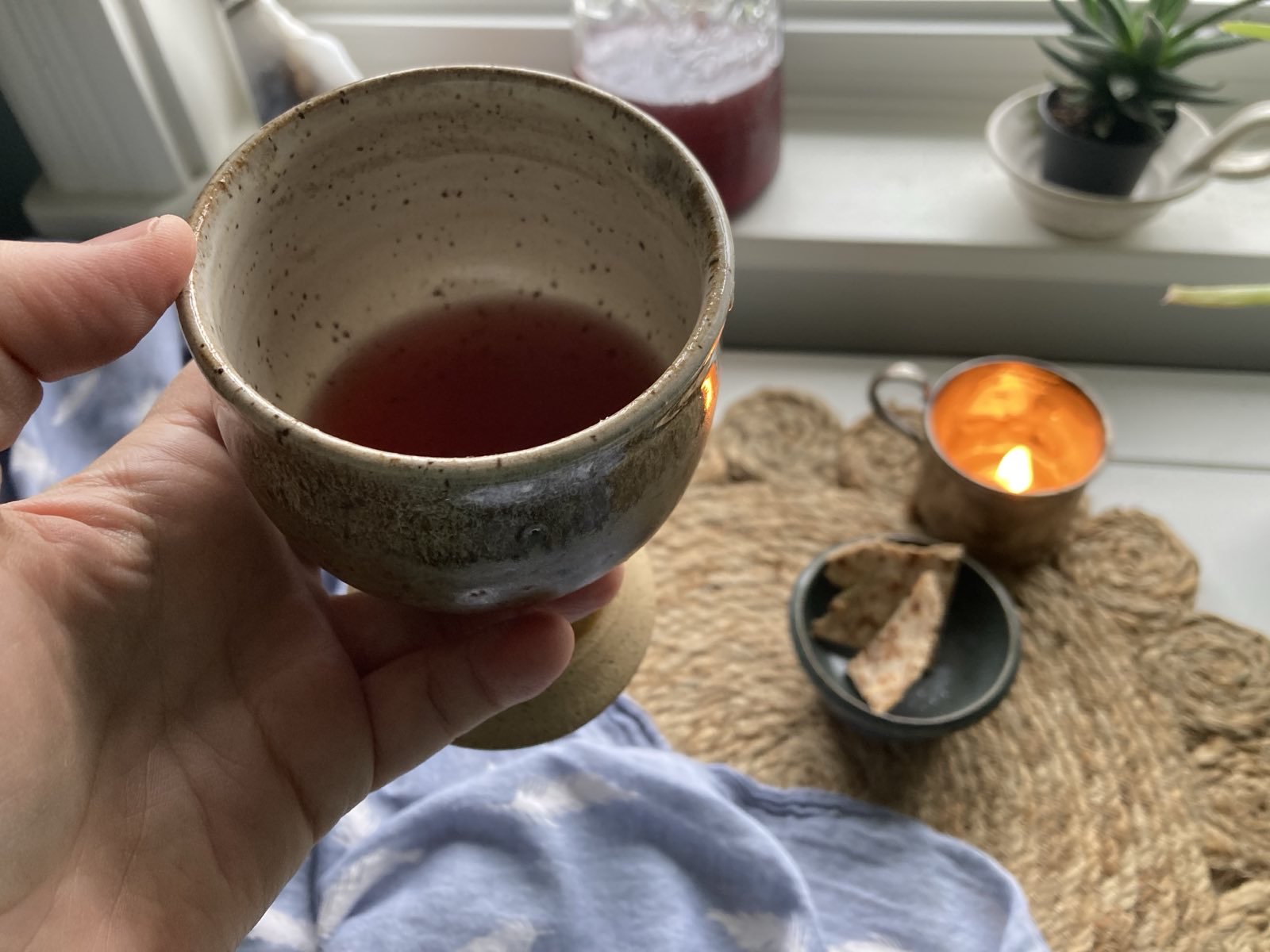
When I was young and growing up in a big church, communion Sunday came once a month. I remember the “church ladies” in their pastel polyester blouses and sensible shoes, bustling around the church kitchen carefully preparing the silver-colored trays for the service. Each tray had a circular grid of tiny plastic cups, filled just shy of the brim with red grape juice, and there were matching trays of broken saltine crackers arranged neatly atop white doilies.
I had mixed feelings about communion day. On the one hand, the service always ran longer… way longer, at least in my child-sized sense of time, so that always felt unfortunate. On the other hand, we did get a “snack” mid-service, which felt like a highlight. Of course, no one called it a snack, because communion was Serious and Holy. The sanctuary would grow very quiet. Heads would bow, and I’d sit there, often restless in the pew, trying to think about all the bad things I’d done so that I could feel appropriately sorry. The mood was long and sombre.
But once the solemnity lifted and the service was over, the church ladies would sometimes ask us kids to help collect the used communion cups, that had been nested into the holes in the pews. While we’re focusing on confessing, I now confess that I drank from more than a few of those leftover cups. Some adults clearly weren’t that thirsty and had left a perfectly good half-inch of juice behind. I wasn’t about to let that go to waste. Let’s just call it communion-powered immunity. (It was the early 90s. Things were different, haha.)
I was telling this story to my kids the other day, and the memory came rushing back in full color… the maroon padded pews, the tight perms of the church ladies, the standing and sitting in unison as we sang hymns. It was all so reverent, but also foreign in a way I couldn’t articulate as a child.
Looking back now, with grown-up eyes and a heart that’s learned to distinguish performance from the living presence of the Spirit, I can say this, that like so many things religion has ritualized, communion is not what we were told. It’s not about guilt, or a ritual checkpoint to prove you feel bad enough. And it was never supposed to be a focus on the heaviness of Christ’s death.
Somewhere along the way, the King’s Feast became a courtroom. But it was always meant to be a table. A meal. A joyful feeding of the soul!
Still, for many, especially children or those with tender hearts, the language around communion can feel unsettling. Phrases like “drinking blood” and “eating flesh” feels confusing, and the focus on the cross can sometimes eclipse the power of the resurrection.
It is as if something sacred and luminous was wrapped in words too heavy to carry its true essence.
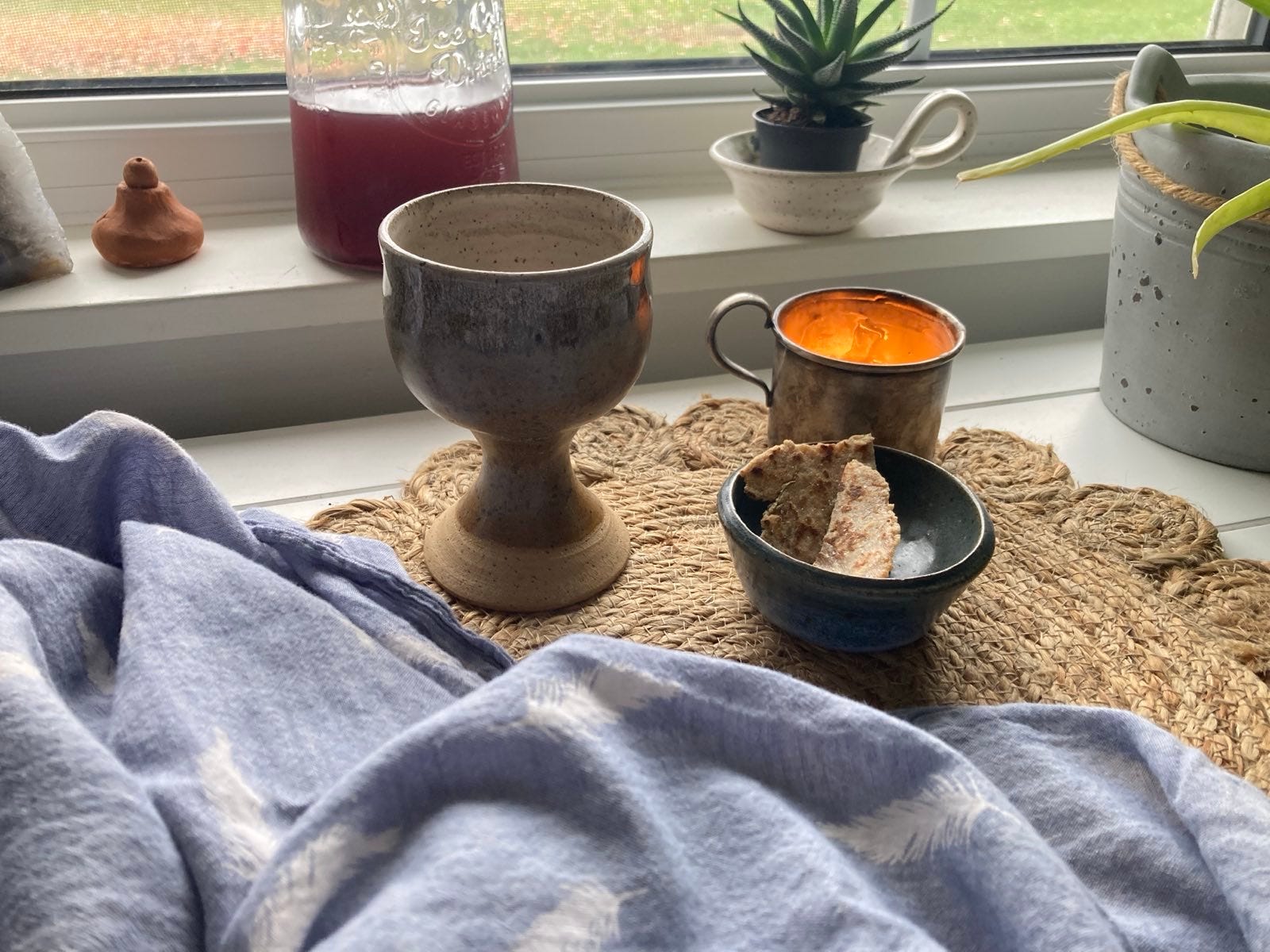
What was meant to be a table of joy and union became, through poor translation and fragmented theology, a place of shame, solemnity, and dissonance.
Jesus intended to nourish us.
It was a meal to remember incorruptible life. A table prepared by a loving King who invites us to become whole again. A place where our bodies and timelines and hearts are gently drawn back into alignment, into belonging and joy.
The dissonance around communion is the frame much of Christianity has put around it. We’ve lost the architecture of what it was intended to be.
Communion is not a moment to re-mourn Christ’s death, or an emotional performance meant to stir up tears or guilt. When Jesus broke the bread and lifted the cup, He was inaugurating a kingdom. He was inviting His friends into a convergence point, a living doorway where heaven and earth meet, time bends, and our identity is restored.
I suspect that the early believers understood this in ways we’ve forgotten.
They didn’t take communion to “feel bad and get right with God.” They took it because they were participating in a supernatural reality.
The bread and cup were portals to a truer realm.
The word Paul uses in 1 Corinthians 10:16 is koinonia, not just “sharing” but utterly fused, a living participation in the life and victory of Christ. It means that we’re being joined to His incorruptibility, His assignment, and His power right now.
It means that we’re not just dealing with sin, but declaring that we’ve already crossed from death to life, and we’re eating the food of a kingdom that cannot be shaken regardless of how shaky this world feels right now.
This act is a declaration of spiritual jurisdiction: We belong to a different world.
In this light, the King’s Feast becomes something entirely different. It is joy! Power, not shame. Radical wholeness, not a hollowed-out ritual. It;s a living threshold, a portal where all timelines meet, where eternity folds into the present and the veil between dimensions is thinnest.
When we come to the table, we are stepping into Christ’s completed triumph, into the body that broke time and the blood that outshouted death. His body is rejoined, and His blood re-codes every cell, memory, and gate we carry.
The bread we eat is memory-encoded substance, charged with the architecture of incorruption. The wine carries the living frequency of the new covenant, vibrating with the eternal signature of redemption, invitation, and union.
This isn’t just symbolic. It is deeply real.
Dimensionally real.
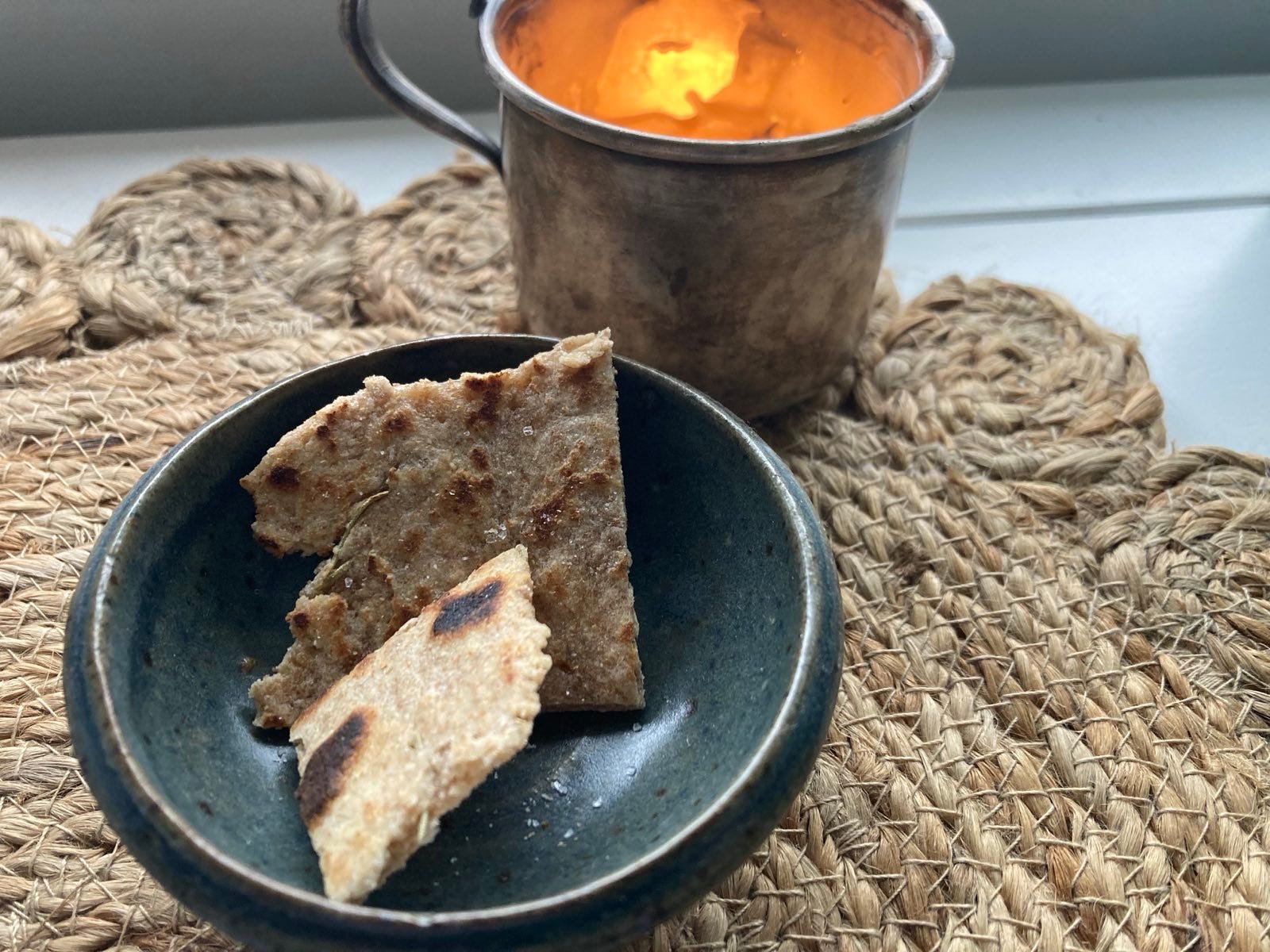
In this act, you aren’t just following along, you are participating in a live field of convergence. God often gives us what might be called “memory technologies” or embodied activations that awaken us into truth. Communion is one of them.
As you enter this moment with awareness, something energetic shifts: Your body begins to attune to the frequency of Christ’s infinite life. Your blood recalls it was never meant to live in covenant with fear, decay, or doom. And your story bends, sometimes subtly, sometimes powerfully, back toward the scroll He inscribed within you before time began.
Jesus’ body governs time, which means that through communion, time itself is recalibrated… generational wounds soften, misaligned seasons reset, and delayed callings begin to stir. Your family line rethreads itself into the timelines of Heaven. Cycles of shame or limitation no longer define you, because you have just eaten the end of death and drunk the beginning of resurrection.
In communion, the lifeforce of Christ enters the conversation of your very cells, recalibrating your inner story toward wholeness and destiny. His power reverberates through your very DNA. Where old words of condemnation, betrayal, and confusion once echoed, now truth flows: You are beloved, healed, and whole.
This isn’t even just about you, it’s about where you live, too. The very land beneath your feet feels the frequency shift when you take communion with revelation. Creation hears it, and the soil remembers Eden. The skies clear, and dominion is re-asserted, because the King’s jurisdiction is once again enacted in real space and time, through one body taking the bread with awe, one family lifting the cup with understanding.
You are not just forgiven. You are recommissioned.
You are being rewritten in real time.
You are are realigned, into the dominion of an unshakeable kingdom that is already breaking through.
So, to take the King’s Feast is to say:
I receive the architecture of His body.
I come under the cadence of His time.
I yield to the story He wrote before I was born.
I resist the Babylon’s hollow rituals.
I step into joy, wholeness, and power.
This is a cosmic interruption in your day! The King has set a table, and every time we sit down with revelation, we spiritually enforce His victory in our bodies, our families, and our regions.
But what happens if someone chooses not to take communion?
It becomes a missed opportunity… a moment where intimacy was waiting, and alignment with the heart of God was available to us.
Communion, rightly understood, recalibrates your body and clears false gates and opens true ones. It anchors you back to the assignment written on your scroll. Which means that without it, your body may drift, your heart may forget, and the region you’re called to steward may go unclaimed, because certain acts of alignment are simply necessary to fully participate in your destiny.
The enemy hates this act because it is legal.
In the unseen realms, the King’s Feast is an enforcement… it reasserts that Christ owns the land, your family, your calendar, your bloodstream, and your region. This is why communion is a sober joy. A moment when the frequency of heaven resettles into the room, into your body, into the grid around you.
I feel like the church has largely missed this.
It has missed the Feast by tying it to sin management instead of kingdom participation. It has made communion about feeling sorry instead of standing aligned. And in doing so, it has created a generation that either dreads communion, ignores it, or reduces it to a quiet moment of internalized guilt. Though it was always intended to be a convergence of joy, dominion, remembrance, and anticipation.
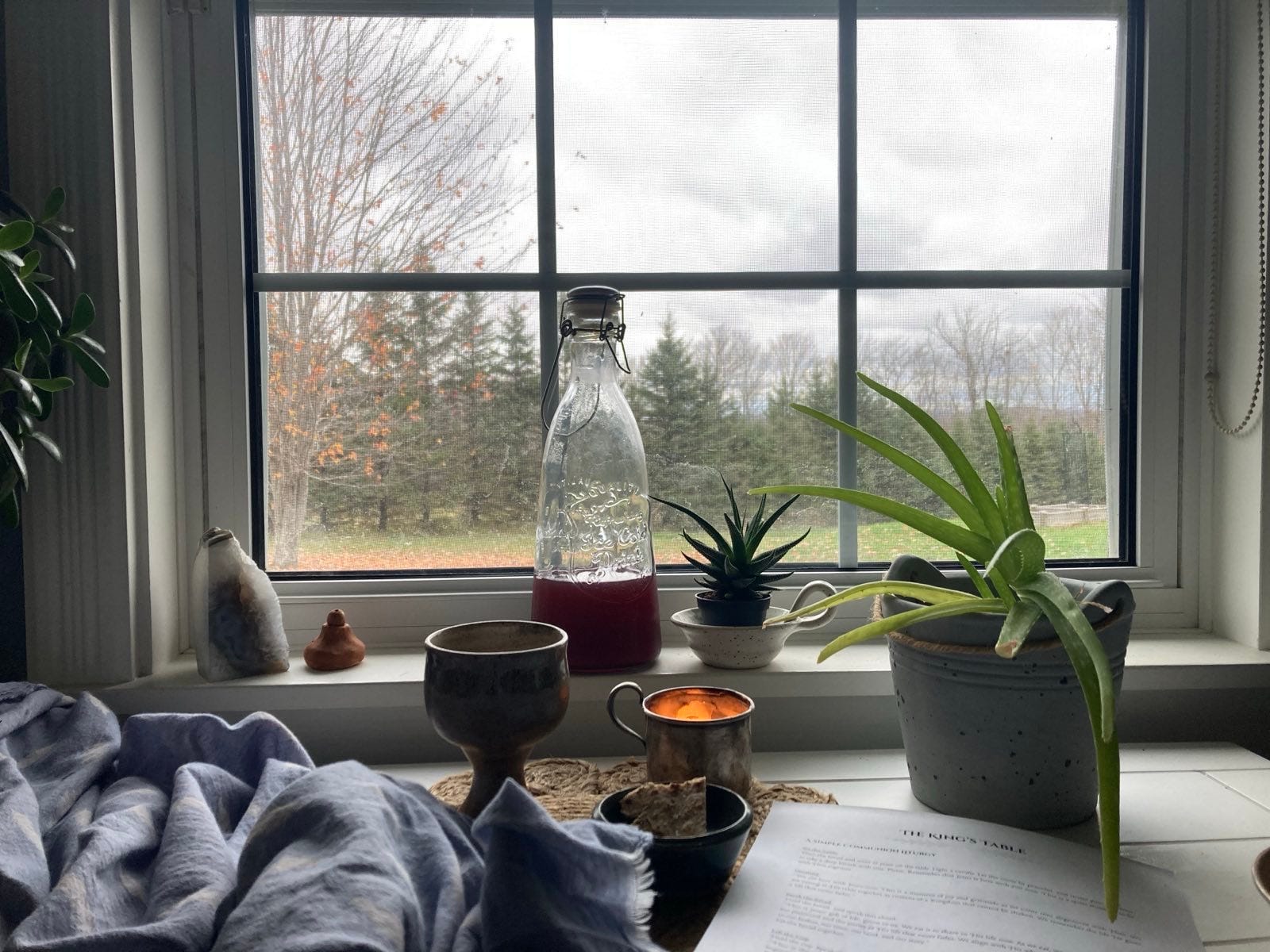
So, if you’ve ever found yourself resisting the way communion is so often practiced, perhaps it has been holy discernment, a sacred stirring against what has grown hollow. Perhaps you are being invited to reimagine communion, to return to the King’s Table with fresh anticipation.
We eat and drink because we are aligned with Christ. We are His kin, His body, His household and heaven draws near to our table.
To reduce communion to an altar of guilt is to forget that it was first a throne of union. The early followers of Christ understood that shared meals sealed realities. In the Hebraic imagination, to eat at another’s table was to enter covenant, to be joined in loyalty, bloodline, and inheritance. Meals were often binding transactions of spirit and space.
The Eucharist—before it was systematized by councils and doctrines—was a declaration of belonging. It was a proclamation of spiritual location. Under whose authority does your life move and flow?
Do you belong to Heaven or to Babylon?
When Jesus said, “Do this in remembrance of me,” he wasn’t assigning an occasional nostalgic act. The word used in Greek, anamnesis, means to re-integrate what has been dismembered by time, trauma, or forgetting. In this act, you re-sync with the living template of the resurrection body, the incorruptible DNA of the new creation. You realign with the assignment seeded into your being before time, the field of Christ’s governance that transcends nations, death, and entropy.
Communion isn’t really about revisiting the grave, it’s about re-entering the pulse of eternal life.
The King’s Feast operates as a jurisdictional portal. It is a site of legal reassertion in a contested realm. So, when the bread and wine are taken with revelation, they realign the atmosphere, and your body becomes a vessel of recalibration. The land responds. Structures respond. Time responds.
This is spiritual law.
Paul wrote, “The cup of blessing that we bless, is it not a koinonia in the blood of Christ?” The term koinonia describes a fusion of realities, a living participation in another’s essence. So, when one takes communion, one becomes resonant with incorruptibility.
This is true coherence.
One’s being becomes retuned to the frequency of the eternal body.
The enemy of God (and of those who carry His image) doesn’t fear stale rituals. But, he does fear jurisdictional authority. He fears acts that establish legal dominion over contested territory. And this is why the King’s Feast is hated in the unseen realm. Because it’s also about territory. When communion is taken with kingdom clarity, it becomes an act of reclamation over cities, families, timelines, and even DNA.
Many who have grown up in the church have recoiled from communion, because it has flattened into a ritual performed in shame, performance, or obligation that can’t hold the weight of the cosmic convergence it is meant to carry.
Children sense this, and sensitive spirits sense this. And it is right to pull back when the frequency is misaligned. But the way forward is to reconstitute it, not throw it all away.
The communion meal must be rebuilt again on right architecture.
The King’s Feast transcends time entirely.
It doesn’t just commemorate an ancient moment; it stitches the participant into an eternal one. This is about stepping into an eternal moment that is still happening in Kingdom time.
To take communion with awakened awareness is to move beyond just the metaphor. You are not imagining the cross, you are participating in its rupture of death’s grip over everything. You are not recalling the resurrection, you are re-membering yourself to the incorruptible body that rewrote the laws of decay. And you are not waiting for the New Earth, you are already seated at its unfolding gates!
Your lineage is the inheritance of spiritual DNA that predates your physical birth and extends beyond your temporal lifespan. When you take the bread and the wine in faith, you are activating the line of Christ as Firstborn of a new species, what Scripture calls the “firstfruits of a new creation.” In Him, you are genetically re-patterned. Communion awakens that deep memory and reminds your body and soul who you actually are in the Kingdom, a re-gened being capable of carrying light, wisdom, and real authority on the earth. You come from a line that cannot die.
Scrolls refer to the embedded assignments carried in your spirit before the foundation of the world. Psalm 139 speaks of “all the days written in your book before one of them came to be.” These are the coordinates of your specific calling, your destiny blueprints.
Communion softens the veil between dimensions so that what was sealed can begin to be read again.The King’s Feast is about coming into alignment with your destiny. When the wine and the bread converge with your agreement, your scroll becomes readable again, by you, by heaven, and sometimes even by those called alongside you.
This is why the enemy has targeted communion for such distortion.
When it is stripped of its power (either reduced to a hollow ritual on one side, or veiled in mystical distortion on the other) it ceases to threaten the mimic dominion of the enemy. What was meant to recalibrate time, identity, and authority becomes either a dead performance or a counterfeit mystery, severed from its true resonance. Only when the bread and wine are restored to their full meaning does the act recover its original power: a portal of alignment, inheritance, and true governance.
It awakens the saints to what is truly unfolding right now, in real time.
The architecture of Kingdom convergence begins to loosen from the grip of the false matrix. This is why communion is also warfare, because it resets legal ground. It declares, “I am not of this world. I belong to a higher order. I remember who I am.”
Communion becomes the spiritual act that re-seats you in active participation with Christ’s life, governance, and assignment. It is about becoming more calibrated. You eat the bread because your entire field needs re-synchronization. You drink the wine because you are re-coding every one of your cells to vibrate with the voice of the Creator.
This is spiritual physics.
Your body, when aligned, becomes a witness in the court of heaven. The blood, when honored, becomes a testimony against counterfeit covenants. So, communion realigns not just our memory, but also our spiritual authority.
Now, one more thing… for those who live attuned to the sanctity of life, who chose not consume violence or partake in death, the King’s Table is not a contradiction to their sensitivity, but actually a validation of it. The act was never meant to glorify suffering or to dramatize blood sacrifice. The Feast is about union, how what we eat becomes a part of us. It’s a re-entry into incorruptible life.
Christ didn’t give us His death to consume, He offered His indestructible life to share. In this sense, the Table lifts you out of the age of sacrifice altogether. It ends the economy of taking.
To participate in communion with unveiled understanding is to exit the system of fear, shame, and separation altogether. It is to say: I no longer feed on domination or death, I am nourished by union, by joy, by un-killable life.
What is ingested is wholeness and holiness. You are not eating death, you are becoming one with the life that could not be killed.
Communion is like a mulit-dimensional restoration. The bread and wine are frequencies of fusion, so when you partake with revelation like this, your body remembers Eden. Your spirit realigns with your true Source. You are not consuming another’s offering, you are becoming the offering of love.
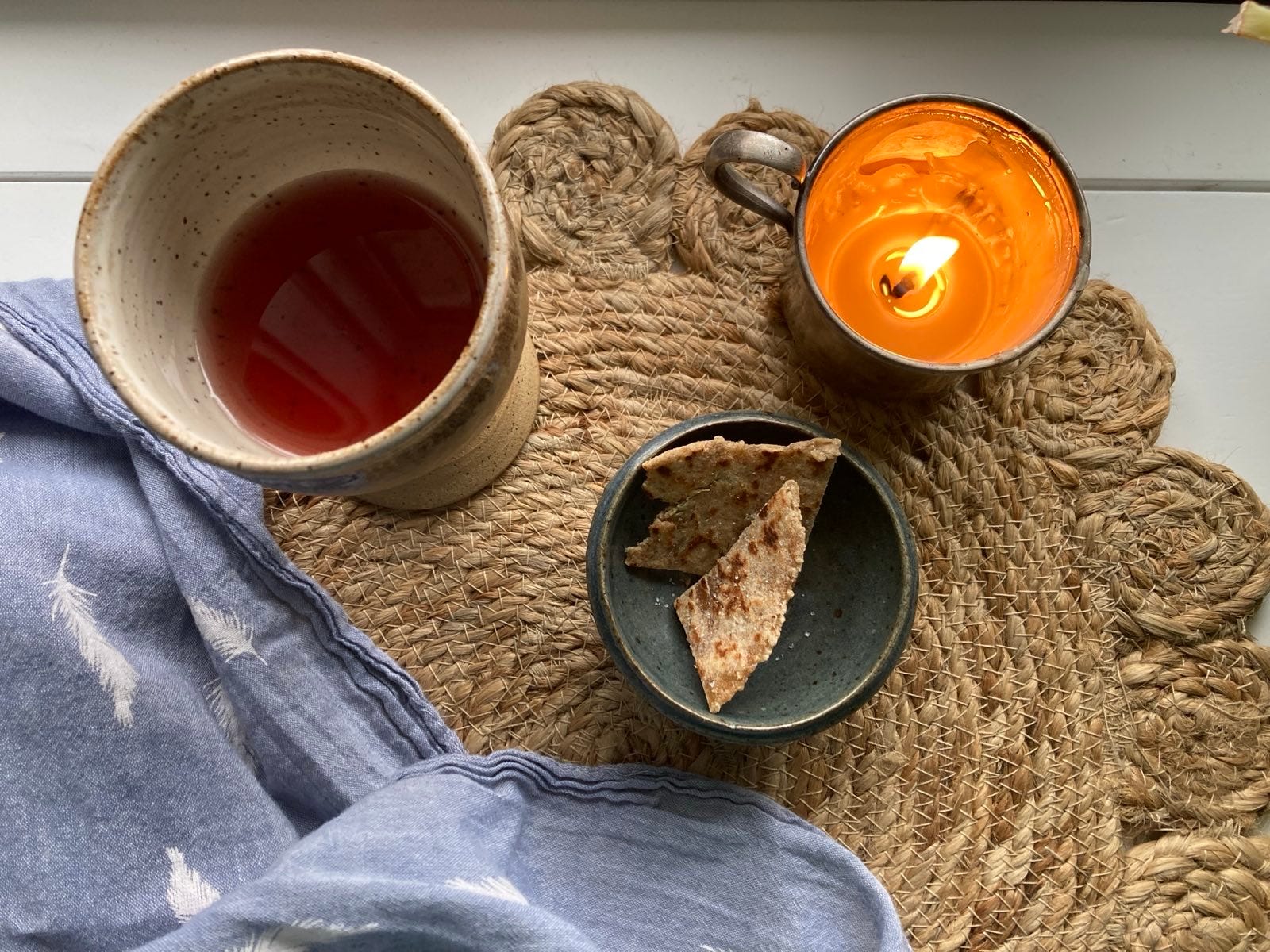
Communion shifts the frequency of the land we live on and reasserts Edenic coherence. The bread re-tethers our body to right order, and the wine reclaims our lifeblood from mimic timelines. The King’s table is like a grid node, so when a family eats with revelation, their home becomes a spiritual gate.
There is a profound distinction between taking communion and being taken by it. To take communion is to touch the surface, but to be taken by it is to allow the act to rewire you, arresting your fragmentation, dissolving false alignments, and re-tuning your body to the frequency of the King.
It builds something in and around you. A resonance field, a governing grid. And this kind of alignment is urgently needed in a world awash in mimic altars, synthetic feasts, and hollow rituals.
To restore the King’s Table within your home is to awaken a long-dormant convergence point. It’s not a return to religious routine, it’s a spatial reactivation. A gate opens. A memory returns. This meal is not centrally about personal sin; it is about jurisdiction and cosmic reclamation.
“My body, my time, my region, and my lineage are no longer orbiting the empire. We are aligned with the King.”
In this light, the future of communion will break open in homes, on mountaintops, in unexpected places, and among families who recognize that Jesus is not a martyr to mourn, but a King to converge with now.
This is where communion dissolves mimic scaffolding and realigns the substance of your being with incorruptible life. The King’s Feast calls you to remember your origin, your authority, and your place in the architecture of the coming great restoration.
Maybe it’s Time
This may be the perfect moment to begin practicing communion at your own kitchen table, regularly and intentionally, with your family. And if they are not ready to join you, you can still set aside a quiet moment to receive communion on your own and respond to the invitation being extended in your spirit right now.
If you’d like a simple liturgy to celebrate communion on your own or with your family go to my website for a free printable download.
Go here, if you’d like a free printable download of the simple-fermented drink and rustic flatbread I make.