Remember being young in the fall? Raking crunchy leaves into piles, the feel of a good sweater on your body and smoke in the air, maybe a mug of hot chocolate waiting on the porch while you helped mom clean up the spent summer gardens and built a small campfire in the backyard? Remember what it felt like to live for simple things, when our days held some honest chores and innocent play, and the future still felt wide, exciting and unthreatening?
None of us ever imagined we would stand at the brink of a rising global order intent on gathering all of humanity into its net of control.
We didn’t see that coming.
Our grandparents never expected to be thrust into war, yet it came and unraveled the world they knew. History is full of such interruptions, breaking through our best-laid plans and shaking us awake. And we are not exempt from these great upheavals simply because we’re so modern.
Now it is our turn.
We stand at the edge of a global system intent on tightening its grip around every corner of human life. If you have ever read Brave New World or 1984, you know that are standing at that threshold. This is where prophecy collides with dystopia.
“If you want a picture of the future, imagine a boot stamping on a human face—forever.” (1984, George Orwell)
Most people move through their days without considering the machinery that quietly governs them. We swipe a bank card, board a plane, sign in at the doctor’s office, or unlock our phone with the touch of a finger. So convenient. Yet beneath these ordinary motions, a deeper current is pulling us toward something truly unprecedented.
The world is shifting toward an identity grid from which there is no exit once you step inside. It is offered in the language of progress, safety, and efficiency, but its blueprint tells another story…
It is nothing less than an architecture of total control.
Biometrics
Your biometrics are the physical or behavioral traits that make you uniquely you. Fingerprints, face shape, iris patterns, voice recordings, even the way you walk… these are all biometric markers. But, unlike a card or a password, you cannot misplace them, because, well, they are part of your unique body. That is what makes them attractive to governments and corporations, and its also what makes them dangerous.
Until recently, tracking ones identity meant having documents. A driver’s license, a passport, a birth certificate; pieces of paper or plastic that pointed back to you. If you lost them or refused to present them, life might become inconvenient, but you could still function.
But, the shift to biometrics changes the rules.
Your body itself becomes the key, and the system becomes the lock. Once your biometrics are captured and stored, you cannot ever walk away from them. You cannot change your face or your fingerprints. And when every door in society requires that key, your access to life depends on a database you do not control.
The process is nearly the same everywhere it is being rolled out, people are told they must “enroll” for convenience or security so they sit before a camera, place their fingers on a scanner, or stare into a lens that maps the geometry of their face or iris. That data is then stored in a central database and linked to all other records — banking, health, tax, benefits, sometimes even internet use, school records and work. And from that moment on, every time they wish to use a service, they must pass through biometric verification. If the system recognizes them, the gate opens. If the system does not, the gate slams shut. (Think Minority Report here.)
Some will shrug and say, what’s the big deal? After all, most people already unlock their phones with a fingerprint or a glance, already tap a card to pay for groceries, etc. But the difference here is not in the mechanism, but in the ownership. This is no longer a local password you control, or a key you can keep in your pocket. This is your very body turned into the password, and the gatekeeper is a remote authority.
This is not a small upgrade from paper to digital. It is a fundamental shift in what it means to exist within society. To “be recognized” becomes the condition for buying, selling, moving, or receiving access to social benefits. And that recognition is in the hands of a machine, tethered to a central authority that decides when you may pass and when you may not.
The Digital ID Net
Digital ID is the name given to this new structure. It is a web that binds together every aspect of your life. It links your identity to your financial accounts, your medical history, your phone and internet use, your travel permissions, your tax filings, and increasingly, your day-to-day transactions. The pitch is that it will make everything smoother. One login for all of life. How lovely! One trusted key for every service. One database that “keeps you safe”.
(Don’t you love how the bad guys always care so much about our safety?)
The reality surrounding the Digital ID is starkly different. Once your identity is centralized, whoever controls that database controls you. They can decide who may access money, who may board a bus, who may receive medicine, who may vote. Already, governments and corporations are using these systems as levers of compliance. If you do not register, you are cut off. If you resist, you are frozen out.
This isn’t science fiction.
It is unfolding right now. In Vietnam, as of this month, the government ordered banks to suspend or close accounts for anyone who had not linked them to the new national biometric identity platform. Overnight, millions of people found their savings inaccessible, because they had not handed over their faces or fingerprints to the system. In India, the Aadhaar program now ties over a billion people to a single biometric number required for everything from banking to receiving food rations. In Nigeria, phone users were denied SIM cards unless they linked them to a national ID with biometrics. In China, the social credit system has already demonstrated how digital surveillance can determine whether a person may travel, enroll their children in school, or even access a loan. Beginning next month, the European Union will require biometric scans at its borders—no longer stamping your passport, but using facial and fingerprint recognition as the condition for entry! Alongside this, the EU is piloting a Digital Identity Wallet that uses these same scans to unlock access to services.
These are not rumors or distant possibilities, my friends. They are present realities. They show us that the net is already being woven, strand by strand, and once you are inside it, every transaction, movement, and service depends on passing the test of recognition.
Each case follows the same pattern.
First, the program is presented as optional. Early adopters receive perks like faster lines at airports, quicker bank transfers, or easier access to welfare. Next, participation becomes compulsory for “high risk” transactions, like anything involving money, property, or international travel. Finally, it becomes the only way to live. Refuse to enroll, and you are excluded from the economy itself.
This is why many have come to call it the beast system.
It consumes the very essence of what it means to be human. The sacred spark of the spirit is reduced to a unit of consumption, a data point in a vast machinery. Ancient scripture foresaw a mark that would lure humanity into a death trap with the promise of ease. It whispers of safety, speed, and inevitability. Yet beneath that polished language lies a hard truth: once the necessities of life hinge on biometric ID, those who accept it have bound themselves to a system stripped of true life. It may continue to function and even appear ordinary for a season, but beneath the surface, allegiance has been transferred into the grip of a technocratic order.
Where We Are in the Timeline
It’s tempting to think that we have time before such systems reach full force, but the evidence suggests the opposite. The rollout has already begun, and the acceleration is upon us. The phase of voluntary enrollment is already largely behind us. We are now entering the season of compulsory adoption. Over the next two to four years, expect all banks, hospitals, schools, and border agencies to say openly, “We only accept biometric ID.”
Just days ago, England moved to accelerate its digital ID system, announcing that by next year workers will be required to present a government-issued digital credential for employment checks. In Australia, new regulations take effect on December 27th requiring online platforms to enforce age verification, with biometric scans, photo ID, or digital ID among the approved methods. These are not distant possibilities. They are concrete timelines. Once the essentials of life (work, travel, health, and communication) are locked behind biometric gates, compliance will no longer be a choice. To reach the goods and services we’ve been conditioned to expect, even to crave, people will submit.
“We also preserve the illusion of freedom. But in reality, there is none. People are controlled by their desires, by their conditioning, by their pleasures.” (Brave New World, Aldous Huxley)
After that, the clampdown begins. Accounts are frozen, or services are cut off to those who hold back . Whole populations may be locked out simply for refusing. Vietnam already showed us a glimpse of this. The same tactics will spread quickly, especially in places where governments already hold a tight grip on money and communication. Within a few years, trying to function without a biometric ID will be almost impossible.
The final stage comes when all the systems converge and finance, health, mobility, government, and communication are all bound into one identity grid. At that point, Digital ID becomes the single gate through which life passes. Allegiance to the system becomes the condition for existence, and this is where the choice becomes unavoidable: submit and be absorbed, or refuse and live outside.
Some will look for clever workarounds, and for a time they might find them. People will barter, trade in cash or decentralized currencies, build local economies and private networks. Certain nations will drag their feet, and communities will carve out pockets beyond the reach of strict enforcement.
These measures will matter, as they will buy time for families to move, plant, and root in more off-grid zones away from the urban centers. This will preserve small islands of freedom, but not stop the tide.
And yet seeing this now is a gift, because it means we still have time. Every act of non-compliance matters, starting today. Each refusal strengthens the muscles we will need later. This is the hill to die on. The resilience we build now will be the very thing that carries us through what is coming.
Hold Your Sacred Keys
Once you surrender your biometrics, you have given the system permanent access to your body as its key, and you cannot revoke it. You can’t change your fingerprints, or alter your eyes. The system will own the right to decide what you access.
Many people tell themselves they will draw the line later. They think they will accept a scan at the bank but refuse when it comes to worship or conscience. But by then it will be too late. The early handover is the critical moment. Every biometric given today strengthens the architecture that will enforce compliance in the days to come. To withhold your biometrics is the simplest act of preserving sovereignty in the coming years.
This is not only about privacy, it’s about freedom itself. Without sovereignty over your body, you cannot truly choose. The system will eventually choose everything for you.
Choosing Freedom
It feels heavy and unpleasant to even bring these things up, when what I’d rather do is take the kids for a hike in the woods and breathe in the fresh cool air (which, by the way, is still a good idea!). But steady and intentional preparation matters. The wisest step we can take right now is to lessen our dependence on the system before it fully closes in. That looks like learning to live with less reliance on digital banking, fragile supply chains, and centralized services. It looks like tending whatever land we have, planting food, and weaving local circles of trust. It looks like training our children to recognize truth from propaganda, to spot the snares hidden beneath convenience and the glossy language that makes this socially agreeable, and to prize freedom above all else. What matters now is steady, intentional preparation. The surest step we can take is to loosen our dependence on the system before it locks us in.
It also means choosing where and how you will live. Urban centers and financial hubs will be the first to enforce Digital ID. Remote regions, agricultural zones, and rural communities will hold out longer. Families who quietly prepare in those areas will find more space to breathe. The preparation is not just physical but cultural. Communities that value freedom, faithfulness, and simplicity will preserve the memory of what it means to be human outside the grid.
This also means remembering that saying no to the system is not only an act of resistance, but an act of hope. It is a declaration that your worth is not measured by databases, that your children’s future is not bound to biometric gates, that humanity itself is not destined to be swallowed by algorithms.
We are standing at a global inflection point.
The signs are already here… the acceleration is undeniable. Within this decade, every soul will face the choice. The system will call it security, but it is centralization. It will call it progress, but it is the final captivity in the beast system described in the book of Revelation.
The hopeful news is that those who prepare now, who live smaller and freer, who build rhythm on the land, raise their children outside of the pace of the machine, and nurture trust within their households, will endure as sovereigns connected to their Creator as their source of life and liberty. They may go without the luxuries the system offers, but they will live as free men and women, not as subjects bound to a digital feudal order.
Our world is being lured into a vast technological grid, but this is not a hopeless story. These are real inflection points for the soul of humankind. The stakes could not be higher, yet you are not powerless. You can can say no and you can prepare. Every act of refusal, every seed of self-reliance planted now, becomes the root of tomorrow’s freedom.
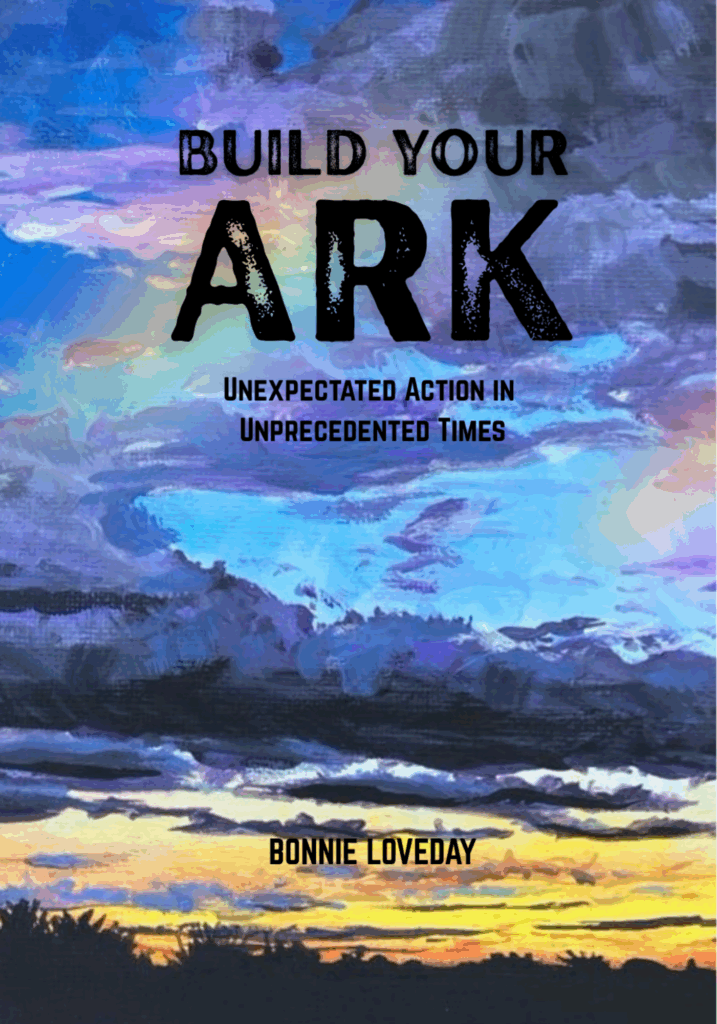
We’ve got work to do, but the time is short. I cover the actions that sovereign families need to take in my book, “Build Your Ark”.